I Like Them Bitter | Valentina Cirasola | Author and Designer

“Eat bitter vegetables, they will purify the liver!” This was my grandmother’s admonishment every time she prepared vegetables, which was everyday.

As kids my two brothers always turned their noses up at this statement, it sounded an awful punishment, but not for me. I was an experimenter, I liked to eat since a very young age and taste, taste, taste everything.
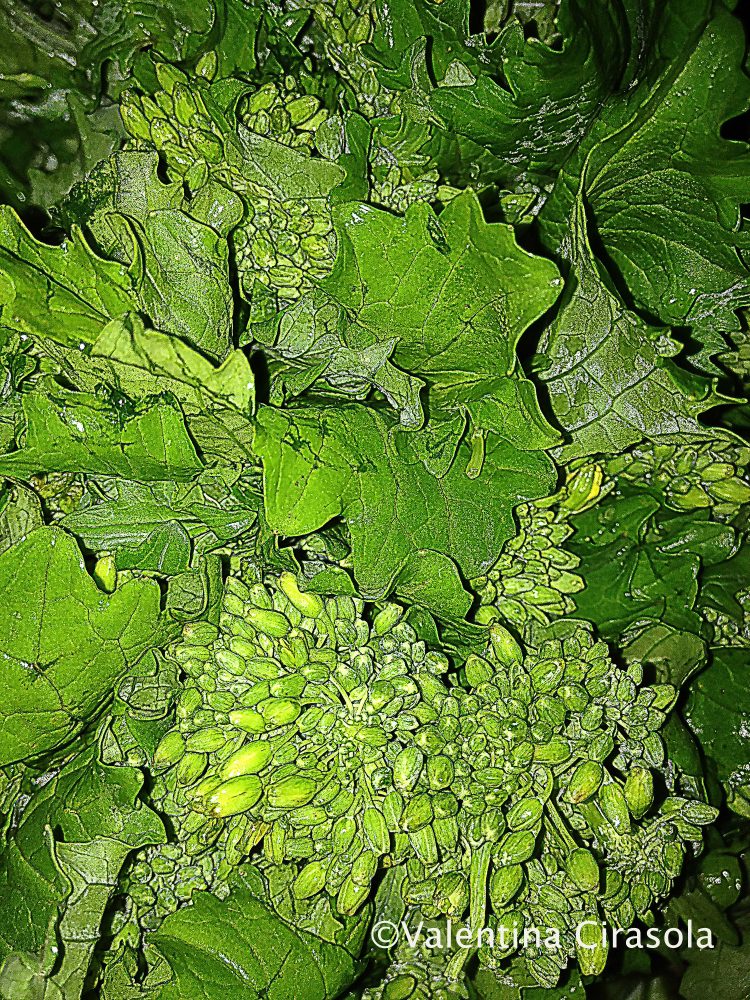
In the spring time, Cardoni, Cardoon in English, a very long hard stalk vegetable is available in any market, at least in those markets which caters to their ethnic clientele. The  younger shoots also called  Cardoncelli, not to confuse them with cardoncelli mushrooms, are very tender and less bitter. In any case, young or well-grown, Cardoni is not a well-known vegetable.
It looks like celery, it is very bitter, fibrous, medium green color and the short leaves have a powdery feel to the touch. They are delicious in every cooking solutions, but most people not knowing what it is, get discouraged and leave it on the shelves of the supermarket.

The reason some vegetables taste bitter is due to the presence of phytonutrients that act as powerful antioxidants including some flavonoids and polyphenols. Most of these antioxidant nutrients are bitter. Be prepared,  Cardoni are very bitter.

In my Italian culture, bitterness in vegetables is embraced wells for the variety of flavors components and for the perceived medicinal properties. In fact many of the Italian digestive and after dinner drinks are made from artichokes and/or many bitter herbs and vegetables, but please don’t tell me these particular drinks taste like cough drops, it is not true. To retain and enhance the bitterness of some vegetable, we Italians often use the sautéing method in garlic and oil, versus boiling or steaming them.

One way to cook Cardoni is with eggs:
Peel them with a potato peeler to eliminate the stringy fibers, cut them in small pieces, parboil in salted water for 7-8 minutes. Beat a few eggs, season with salt, pepper and Parmigiano cheese, set aside. Sauté Cardoni in garlic and olive oil until translucent, add the beaten eggs. Stir until the eggs become scrambled and well mixed with Cardoni. Adjust season to you liking. A robust glass of red wine is very appropriate.

Baked au gratin is another way to prepare them. Peel, chop and parboil in salted water like in the previous method. Butter a baking dish, arrange the Cardoni parboiled, add beaten eggs, season to your liking. On top add a lot of Parmigiano cheese, breadcrumbs and a few dollops of butter. Bake under the oven grill until the top is brown and the eggs are coagulated.
(Photo Cardoons at farmers market. Credit: blowbackphoto / iStockphoto.com)

Of course Cardoni in soups with potatoes, or baked with hot sausages, or lamb are equally a delight to eat . They are fresh and light, too bad they only come out in the Spring.

The tongue has receptors, especially in the back side. Keep the taste buds active by exercising all 50.000 of them with sweet, salty, sour and bitter food.
Don’t try to overcook vegetables to take out the bitterness, Cardoni are supposed to do a good job for you, cleanse the liver and keep you young.
My grandmother was always right. Ciao,
Valentina
www.Valentinadesigns.com

Copyright © 2011 Valentina Cirasola, All Rights Reserved

Valentina Cirasola is an Italian Interior Designer with a passion for kitchens and cooking. She operates in the USA and Europe.
She loves to remodel homes and loves to turn ugly spaces into castles, but especially loves to design kitchens and wine grottos.

She is the author of two published Italian regional cuisine books, available in this site on the Books page, Amazon and in various locations:
©Come Mia Nonna – A Return To Simplicity –  http://outskirtspress.com/ComeMiaNonna
http://www.youtube.com/watch?v=Lnq8baaAq0M
©Sins Of A Queen – http://outskirtspress.com/SinsOfAQueen
Pass The Salt, Please | Valentina Cirasola | Author and Designer

PortaSale ©Valentina Cirasola

Photo ©Valentina Cirasola

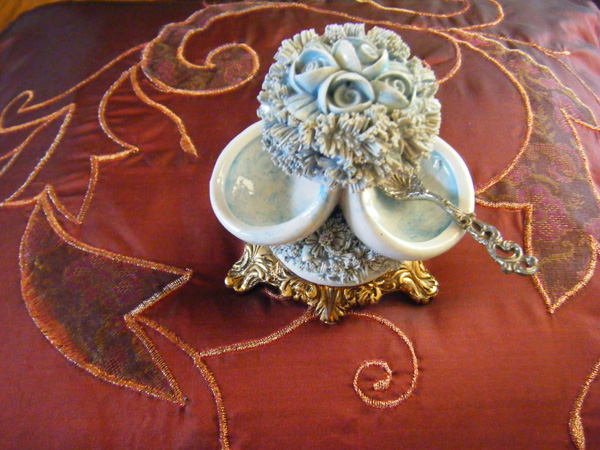
Among all the small treasures my mother left me, there is a quaint salt container that stole my heart. It is a hand-made Capodimonte ceramic with a brass base and a silver spoon.
(Photo left Capodimonte Salt Cellar property of ©Valentina Cirasola)

My mother put it out during the “feste terribili” meaning those important occasions when a lot of guests came and the table was spectacularly made up. This small vessel contained salt as a courtesy to the guests and it was intended to pass around when needed. However, it was rarely used, if food is properly balanced with seasons and flavors, there is no need for additional salt.
Adding salt to food served at the table is a kind of offense for the chef or cook.

Before refrigeration was invented, salt and many different spices were so important for the conservation of meat and fish. In the haute cuisine of the Middle Ages, spices were abundantly used for a couple of reasons, one was to prove a higher status symbol. Rich people could afford the high price of all the spices and thus consumed about 2 lb a day, but in more modest households the common spices used were the most affordable: vinegar, mustard, onion, garlic and of course salt. The second reason for using salt and spices was to cover up at times the dull taste of meat gone bad and unpleasant fish smell.

Salt consumption in the 13th century was in such a high demand for preservation of food that it was necessary to create beds of sea salt drawn from Oceans and Seas. It was coarse and dark with all the impurities of the sea, but better for curing meat than refined salt. The white variety of salt was used for cooking, thus it was more expensive.

Did the people in the Middle Ages use salt shakers at the table as we do today?  No, but hear this.

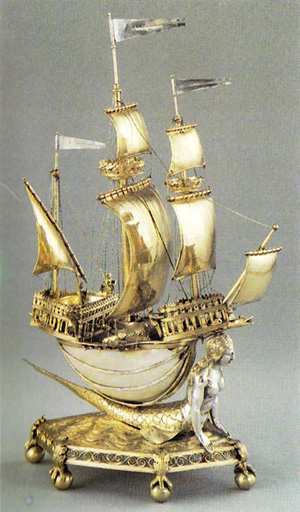
In the British Museum, I saw the Nef, a stunning elegant salt vessel used in the Middle Ages and Renaissance. This extravagant 15th-century table piece was made in the shape of a ship with the most elaborate head masts, sails, and even crew.
The particularity was that the Nef was placed in front of the most important person at the table as a respect to their high status. After the VIP used it, the Nef was rolled from one end of the table to the other.  The examples made with wheels were the most elegant, but most had legs or pedestals. The German-style Nef had clock, music, and figurines animated by a small engine.
(Photo Burghley Nef: https://collections.vam.ac.uk/item/O73113/the-burghley-nef-salt-cellar-unknown)

A Nef was usually made of silver, silver-gilt or gold, often further embellished with enamel and jewels. I would have wanted to own and cherish such an exquisite piece, just like my mother’s piece!

The dinner table of the Middle Ages and Renaissance always fascinated me. No silverware only knives, no napkins, no refined glassware, but they had spices in abundance and during the grand feasts, they even had the grandest effects with gold and silver leaf gilding the beaks and feet of roasted birds, pheasants, swans, and peacocks.

It amazes me to think about how so many sophisticated effects were achieved in dark kitchens, full of smoke, unhygienic, no automation, heat, long hours of preparation and cooking handling heavy pots.
This proves what I have always thought: if you know how to orchestrate a meal, you can do it anywhere, “small kitchens are for geniuses”.

Remembering my mom, I often put out her Capodimonte ceramic salt vessel on my table, right along with a less pretentious container made from Himalayan salt intended for salt.

This article was also published on the Italian American Foundation Paper. 

I am here to help you find any historical object, any gadget for kitchens, or any extravagant piece for your home in furnishing or art, just leave your name in the box below. Ciao,
Valentina
www.Valentinadesigns.com

https://www.youtube.com/watch?v=eC2LVXANG5U&ab_channel=affluentliving

Copyright © 2011 Valentina Cirasola, All Rights Reserved

Valentina Cirasola is an Italian Interior Designer with a passion for kitchens and cooking. She operates in the USA and Europe.  She loves to remodel homes and loves to turn ugly spaces into castles, but especially loves to design kitchens and wine grottos. She is the author of two published Italian regional cuisine books, available on Amazon and Barnes&Noble
Come Mia Nonna – A Return To Simplicity 
Sins Of A Queen 


Are You Getting Your Palm Twisted? | Valentina Cirasola | Author and Designer

I love the religious holidays in Italy. It is time to renew our traditions, to bring family together and to teach the youngster what really matters.
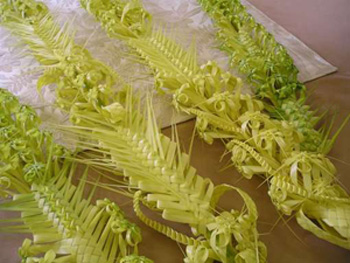
(Photo palm weaving found on: http://www.italymagazine.com/news/art-palm-weaving)

About a month before Easter the “palmari” , farmers who are true palm artists start to prepare the leaves of palm trees by choosing the female leaves only, which are the longest and thinnest leaves (how do they recognize them is still a mystery to me). For a few weeks the leaves are left to dry covered with a canvas tarp, then they start twisting them in all shapes possible and they become master pieces of art. They are sold in all shoppes in Italy the week of Palm Sunday to give as a gift and a symbol of peace to friends and family members.

In history palm leaves were considered a symbol of triumph, victory and acclamation of royalties.  Today they are the symbol of peace and love.
In some regions of Italy, the faithful take a branch of olive tree with the twisted palm to church to benedict them with holy water, then they place both on the Easter table well overflowing with good food.

Jesus Christ was welcomed to Jerusalem with olive branches, today they are equally used especially in areas where palm trees don’t grow. In northern Europe where even the olive trees don’t grow, this Easter tradition of giving a branch as symbol of peace continues with local leaves and flowers twisted together.

Each year Easter is defined a “low holiday” when it arrives around March and coincides with the pruning of the olive trees, or is defined as a “high holiday” when arrives around April with a warm Spring and when the olive trees might already have new green shoots.

In beautiful Sorrento, South of Italy, on Palm Sunday there is a beautiful show going on in the streets of this quaint town. Women carry in their hands colored confetti made into the shape of branches or small trees and men carry on their shoulders large branches of olive trees with small cheeses called caciocavallo attached to the branch with colored ribbons. The story goes that around 1551 many Saracens ships (Arabs) were coming to invade Sorrento, but the sea started to get agitated and shipwrecked all of them. From then on, Sorrento celebrates its peace and victory with the benediction of confetti and caciocavallo, instead of twisted palm leaves and olive branches as in the rest of Italy.

Decorating the house through the Easter month with palm leaves will bring a sense of peace and a very unusual form of art everybody will admire. The palm leaves made up this way will last for a good three months.
I love to bring original art pieces in my Clients’ homes. I can help you finding them, just leave your name in the box. Ciao,

Valentina
www.Valentinadesigns.com

Copyright © 2011 Valentina Cirasola, All Rights Reserved

Valentina Cirasola has been in business as a designer since 1990. 
She has helped a variegated group of fun people realizing their dreams with homes, offices, interiors and exteriors.
 She designs architectural landscape as a complement to the residential design concept as a unity. She has been described as the “colorist”.

Valentina is the author of two regional and cultural Italian cook books, available in this site on the Books page and also on these sites:
Come Mia Nonna – A Return To Simplicityhttp://outskirtspress.com/ComeMiaNonna
http://www.youtube.com/watch?v=Lnq8baaAq0M
Sins Of A Queen – Italian Appetizers and Dessertshttp://outskirtspress.com/SinsOfAQueen
 

Centuries Old Mediterranean Diet | Valentina Cirasola | Author and Designer

As the economy has turned considerably sour, there has been some serious thinking going on in people’s minds and many have really shifted their thinking about what is really important and what matters to them.

(Click on each photo to view it larger).

As a designer I have seen lot of kitchens being remodeled and rooms around the kitchen, family room, great room, dining room and even wine cellar to assure more comfort while we are staying at home. I have noticed that people are not eating out as much, but cooking and eating at home, making a meal together has become a social activity and planting food in the backyard to get more natural healthy food seems a new necessity.  Suddenly family, friends and times we share have taken center stage in people’s life.

I read that at the Harokopio University in Greece, researchers examined 50 published studies and more than half a million people who went under test and found that those who followed a traditional Mediterranean diet had a less risk of developing the metabolic syndrome which is the combination of conditions that increases the chances of heart disease, stroke and diabetes.

Mediterranean diet is made of all those foods the industry of “loosing weight” tells us not to eat: carbohydrate in general, grains, sugar, chocolates, wines, even fruit and so on. Have they realized that our body needs all the elements of the nutrition, oils, fat, carbohydrate, cheese, meat, salt, sugar and so on?
The key of the Mediterranean diet is quantity and portions, not elimination of one or more nutrients.

For example 2 oz. of pasta per person once a week, as I mentioned in both of my books, is not a tragedy, but a huge plate of pasta with all the condiments, the toppings and the cheese is. Butter, another example. Anything cooked in butter tastes luscious, but if we substitute it with olive oil, even when making cakes and sweets, we get the antioxidant from the olives and the monounsaturated fat, which is very good for the heart. On that note, eat olives as much as you can, any time of the day and all types, use olive oil on your skin anytime you can, you will see that your skin will turn soft and supple very soon. My grandfather used olive oil on his hair, they turned white, but he had a voluminous and thick hair until the last moment.

In the Mediterranean diet all meals end with fruit and not with sweets. If there is no more room in the stomach for a piece of fruit at the end of the meal, then it would be best to eat it before the meal. Fruit plays a major role in detoxifying the system, supplying a great deal of energy for activities of everyday life and especially when people are in the process of loosing weight.

The consumption of food variety in the Mediterranean diet evolves in the following fashion:
A. Daily consumption of fruits, vegetables, whole grain cereals, and low-fat dairy products, meaning all the cheeses containing water, such as fresh mozzarella sold in water, fresh ricotta, robiola, taleggio and chèvre cheeses, just to mention a few;
B. Weekly consumption of fish, poultry, nuts, and legumes;
C. Red meat intake is kept to a minimum, a couple of times a week;
D. A moderate daily consumption of wine or other alcoholic beverages, always with meals.

Do not overlook all the legumes, they contain all the proteins the meat has without the animal fat. In my second book ©Sins Of A Queen I touch on this subject:
“All beans contain oligosaccharides sugar (simple sugar found in carbohydrate) that the human body cannot process. The lining of the small intestine cannot break down and absorbed the large molecule of oligosaccharides, because the body does not produce the enzyme that breaks them down. Many people have problems when eating beans. Adding a hand full of bay leaves to the beans during cooking helps the digestion immensely”.

In my first book “ ©Come Mia Nonna – A Return To Simplicity, I talk about the value of some overlooked vegetables:
“Spring onions are energetic.
Celery is diuretic. It is also good dipped in red wine.
Chicory, or dandelion is diuretic, tonic, a cleansing and a laxative.
Artichoke reinforces the liver and prevents diseases of the liver.
Fennel is much used in pharmaceutical industry as an aromatic substance and is a good source of water.
Lettuce is calming.
Radishes is stimulating, modest in nourishing value, but rich in vitamin C.
No wonder we eat so much of all this! “

Eat and drink purple things anytime you can. Red wine, concord grapes, blueberries, eggplant, purple cabbage, purple cauliflower. That deep rich color come from polyphenols-compounds (antioxidant), which reduce heart disease risk and may even protect against Alzheimer’s disease, according to new research.

Our ancestors did not know sodas. Skip soda, even the diet type. Scientists recently found that the caramel color added to cola drinks might double the risk of metabolic syndrome (combination of conditions that increase your chances of heart disease, stroke and diabetes), just by drinking one or more regular or diet sodas every day. Furthermore, the sweet fizzy flavor of sodas sends a message to the brain that sweet stuff is good and conditions it to crave more sugary foods, which can lead to weight gain.
If you need a boost of energy during the day, eat fruit.

Drink water, 
an essential element for all healthy body functions. Please don’t drink water stored in plastic bottles, but choose filtered water through activated charcoal, which removes the impurities and leaves the water-soluble minerals.
In the Mediterranean diet, at the end of the meal, we drink warm water,  warm tea or coffee and even warm liqueurs. The warm liquids help dissolve oils and fat ingested during eating, while cold water will solidify the oils in the food leaving those particles attached to the walls of the intestines. Not good at all.

Eating five small meals a day is less stressing on the digestive system. It is easier to process small amount of food instead of large meals; smaller amounts of food deliver a steady stream of nutrients, blood sugar, and energy to our body throughout the day. Eating this way also reduces the risk of heart disease.

It takes 21 to 30 days of repetitive behavior to form a new pattern in the brain. Once the pattern is formed, it becomes an automatic behavioral response. While developing new healthy habits, the good habits will replace bad ones. Stay on track with healthier food, adopt the Mediterranean food to reduce the risk of obesity and cholesterol, eat everything in moderation, have a glass of Pinot with your meal every day and don’t worry about anything else. Above all laugh anytime you can, start to love your body and put your wellbeing, happiness self confidence in the center of your life. Ciao,
Valentina
www.Valentinadesigns.com

Copyright © 2011 Valentina Cirasola, All Rights Reserved

Author of two regional Italian cuisine books. They are both about the Mediterranean diet, both available on the Books page here in this site.
Come Mia Nonna–A Return to Simplicity
Sins Of A Queen – Italian Appetizers and Desserts
http://outskirtspress.com/ComeMiaNonna
http://www.youtube.com/watch?v=Lnq8baaAq0M
http://outskirtspress.com/SinsOfAQueen

Valentina Cirasola is an Italian Interior Designer with a passion for kitchens and cooking. She operates in the USA and Europe.  She loves to remodel homes and loves to turn ugly spaces into castles, but especially loves to design kitchens and wine grottos.

Planting Food, Beauty And Relax | Valentina Cirasola | Author and Designer

Photo ©Valentina Cirasola

Photo ©Valentina Cirasola

Yesterday was a beautiful March day, I wanted to take advantage of the sun, the warm day and my good disposition. It was the right time to think of planting seed for new food. In many European countries is still snowing in March and is the same in Italy, but here in California, in the climate zone 7 and 8, March is the perfect month to plant. My family in Italy is getting jealous!

March is the right time to start feeding houseplants again and repot when necessary. Get the soil tested if you are planning to do some serious food and fruit trees planting. This is the month to start seeds indoor, prune trees and shrubs and get all the garden tools ready for your Spring planting. If you have wet soil in the garden, it is better not to walk on it, use stepping-stones. In my garden, I have many rows of them around plants and vegetation, they are  decorative and don’t get your feet wet or dirty.

I started with Turbo onions, which is a lovely round onion that stores well and the Red Baron red onion, strong-tasting which produces a heavy crop.
I planted shallots, a more delicate onion, which I use more for fish dishes and some other delicate dishes. I want some asparagus and started some crops indoor, such as aubergines the kind called Diamond, originated in the Ukraine. It crops relatively quickly from a sowing in March.

Started cauliflowers, cabbage and tomatoes. Tomato seeds also do well indoor. I got the gartenperle type, small, cherry size, sweet and tasty, grow in beautiful colors as pink-red, deep ruby-red, pink to rosy red. They are great for containers and even hanging baskets. I make a lot of fast and delicate sauces with them. Tomatoes are always a big surprise, they either come out in overwhelming large quantity, or nothing at all.

In mid March plant some early potatoes if the weather where you are permits it, I will.

I bought a few packets of mixed salad-leaf seeds, can’t do without salad in my garden, it’s so easy to grow and need not much care. Put a few seeds on to the surface of your compost and don’t cover them with a thick layer, they need to breathe.

Towards the end of March when the soil has warmed up, I will want to plant some climbing French beans. I have already prepared the soil and placed cane poles in place. Later I will make two holes at the base of each pole and a couple of seeds per hole. Then, I need to be patient.

Between my food I also plant some beauty. Some begonias, dahlias, dusty miller, geraniums, impatiens, marguerite daisies, marigolds, all annuals to beautify my crop.

Photo ©Valentina Cirasola

Photo ©Valentina Cirasola

While thinking of food crop, I was also thinking of cooking in the garden. I made a very simple outdoor cookery device out of a clay pot and bricks.
No cement or mortar, the bricks are just laid one on top of the other in a circle, the clay pot sits inside of the circle. Inside of the pot more bricks form a flat surface for the wood chips and a grill sits on top of them. Food will be placed on the grill. A clay cover with a whole in the center to allow the steam to escape will keep the food cooking for long time.

This is slow food at its best and I am prepared for relaxing weekends, a good time for writing more books and more blogs, or having some friends over.
I really don’t care what goes into my car, but I really care what I put in my stomach.
Please leave a comment below, I can help you with any of your design challenges, including landscape too. I now offer design consultations on-line and without going outside my office I can create an “outdoor room”  for you, or the most beautiful space of your dream.  Ask me for details. Ciao,
Valentina
www.Valentinadesigns.com

Copyright © 2011 Valentina Cirasola, All Rights Reserved

Valentina Cirasola has been in business as a designer since 1990. She has helped a variegated group of fun people realizing their dreams with homes, offices, interiors and exteriors. She designs artistic landscape as a complement to the residential design concept as a unity. Author of three books available on:
Amazon: http://goo.gl/xUZfk0
Barnes&Nobles: http://goo.gl/q7dQ3w


The World Is A Woman | Valentina Cirasola | Author and Designer

Annie_Kenney_and_Christabel_Pankhurst_(cropped)-1

Author unknown – Annie Kenney and Christabel Pankhurst of the WSPU, c. 1908 – Public Domain – Wikimedia Commons

There is an old Italian saying which goes: “Who says woman, says damage” and can’t help smiling about these phrases made up by the ignorant. Damage for whom or what?  This saying was coined when women were considered second class citizens and kept under submission. (Photo left found on: http://imgur.com/OAqUY)

For century women have been considered the weaker sex and yet they give birth enduring pain, give courage to people who have no strength; they fight wars, become prime ministers and astronauts; women can work even in a man’s field, have a family and make real choices.

But these rights weren’t always rights for women. In the early 1900’s, a time for the great industrialization in major parts of the world, women became more vocal and embraced active campaigns against oppression, inequality, better pay, less working hours, the right to be trained, the right to vote, to hold public offices and end all discriminations. In agreement with the Social Democratic Party of America women started the march toward a long fight for their rights to be followed by major European countries and their Social Democratic Parties.
The International Woman’sDay was declared as a result of those courageous women’ actions and March 8th was the date set to honored all the women who make this world go around and those women who are still battling for their rights.

Indeed, in the third millennium there are still women who are fighting for their rights and are still kept subjugated under antiquated and diminishing laws while atrocious crimes are committed to them.

On this day March 8th is a tradition to give a bunch of yellow mimosa flower to every woman we love, men give to women and women can give to other women too. It is a way to honor the force of nature called Woman! She is the mother and creator of this whole world.

Happy International Woman Day to everybody. Let’s work together to make sure our little girls will have a bright, equal, safe and rewarding future.

(Photo Yellow Mimosa http://wallpapers.ae/beautiful-mimosa-wallpaper.html)

In the meantime enjoy the rest of this Mardi Gras day, hoping it has been a memorable one. Ciao,
Valentina
www.Valentinadesigns.com

Copyright © 2011 Valentina Cirasola, All Rights Reserved

Valentina Cirasola is an interior designer, in business since 1990 and a former fashion designer. She helps people realizing their dream spaces in homes, offices, interiors, exteriors. She writes often on a variety of publication on the subject of fashion, food, design and Italian style. She is the author of two Italian cultural regional cookbooks, both available here in this site on the Books Page:
Come Mia Nonna – A Return To Simplicity
Sins Of A Queen – Italian Appetizers and Desserts

Also available at these locations:
http://outskirtspress.com/ComeMiaNonna
http://www.youtube.com/watch?v=Lnq8baaAq0M
http://outskirtspress.com/SinsOfAQueen
 

Bizarre Faces of Arcimboldo | Valentina Cirasola | Author and Designer

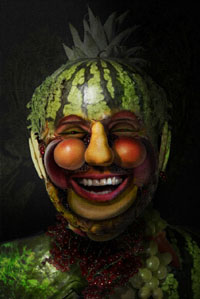
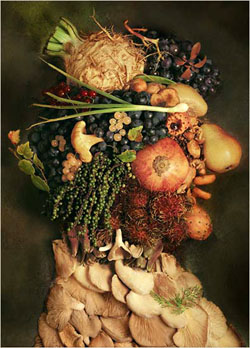
Palazzo Reale in Piazza del Duomo #12, in Milan, Italy will host the exhibition of “Arcimboldo” a Renaissance Mannerist artist of the 1500’s. The exhibition will be open from February 9, 2011 until May 22, 2011 and it will feature the fantastic bizarre “Composite Heads” , the whimsical portraits of the Italian artist who composed them of plants, animals, and objects.


Giuseppe Arcimboldo, also spelled his name Arcimboldi and Arcimboldus, nobody knows why,  the painter used all the names to sign his works, therefore it is uncertain which version is the correct one, but I think extremely creative people want to hide behind various identities to give themself an enigmatic aura.

Arcimboldo was born in Milan in 1527 and grew up during the High Renaissance.  He was born “con la camicia” (with the shirt on, not naked) as we Italians would describe someone born under a lucky star, in fact his father was the painter commissioned to paint the Milan Cathedral. And so his life evolved between one lucky opportunity to another. Giuseppe became a student to the renowned painter Leonardo Da Vinci. In the course of 25 years he became the painter to the royals and due to his ability to design the bizarre was hired by many royal courts as “The” party planner of the sixteenth-century staging the most flashy affairs of  Europe’s courts.


Just imagine gilded fountains and rivers of champagne, flocks of colored birds, music, theater, tons of original artwork, sculptures, and much pageantry. As a precursor of his time Arcimboldo invented unique special effects for the royal events. He called one of his invention the “Harpsichord of Color” a gigantic hydro-mechanically powered musical instrument, a sort of modern organ.

His art was considered more a novelty than great paintings. As famous as he was during his artistic life, he was forgotten after his death and rediscovered around the end of the 19th century. The art critics attribute the lack of interest in his style of painting to a generational changes of taste, fashion and manners.

Particularly I adore the four season paintings series.

In the Summer portrait (above) the gentleman’s nose appears to be made of a cucumber. On the man’s coat the artist embedded his name into the collar of the jacket and the date 1573 on the shoulder at the seam of the sleeve.
Arcimboldo dedicated the series called Earth paintings to the elements of nature.

The very famous Man in the Vegetables painting is an inverted illusion. Right-side up, the painting looks like a bowl of fresh produce, invert the picture and it looks like a man’s face with lips of mushrooms.

A lover of food and food depicted in art like myself should not miss this event, but unfortunately I will. For now, I am just content to tell the story, perhaps things will open up in my busy agenda. Never say impossible.
In the meantime, I am here to help you with the selection of your art for any decor. As the professional who is always ready, I shall be prompt and ready to help you with any of your needs, whether it will be decorating, designing, or remodeling. Just leave your name in the box below, I shall answer in 24 hours time. Ciao,
Valentina
www.Valentinadesigns.com

Copyright © 2011 Valentina Cirasola, All Rights Reserved


Valentina Cirasola is an Italian Interior Designer working in the USA and Europe since 1990. She colors the world of her clients. She has been described as “the colorist” and loves to create the unusual. Her specialty is to design kitchen, wine cellar, entertainment rooms and bathrooms like spas. Author of three books available on:
Amazon: http://goo.gl/xUZfk0
Barnes&Nobles: http://goo.gl/q7dQ3w


Brewing In Architecture |Valentina Cirasola | Author and Designer

LaCupolaGetting up in the morning with that roaring sound of my Italian professional espresso maker really gets my blood going. Aside from the sound of birds chirping outside my bedroom window there is no better sound I like to hear in the morning.
Espresso, my lifetime lover I can’t do without it. My coffee has always been the same type for years, a blend of Brazilian green coffee beans that I toast myself to my liking. Espresso requires special Italian machines to make it frothy, thick and short.

One type of very common machine for family consumption is made for a stove top and produces one cup (small machine) up to twenty-four cups (very tall). The other kind is the café type with a few levels, one for each cup, a selection to make one or many cups at once, the cappuccino and steam feature, temperature/pressure gauge and more buttons that you know what to do. You get the picture, it is a professional machine, which performs for high traffic cafés.  

A coffee maker in Italy like everything in my country must have style, we just don’t settle for functionality, we want beauty in the kitchen too.

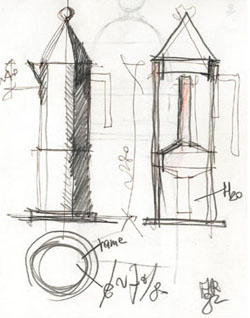
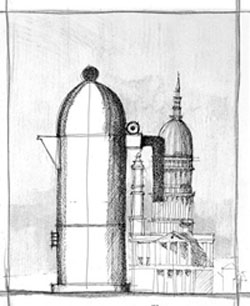
Italian architect Aldo Rossi (1931-1997) using architectural features of Italy designed many attractive famous espresso makers all produced by Alessi. He is considered to be the greatest Italian architect of the second half of the 20th century. It has been said: “Aldo Rossi is an author of abstraction, geometrical patterns and silent evocation created some of the most intensely poetic works of architecture and design in his age”.

In his products he utilizes geometrical shapes to make profound design statements. Aldo Rossi designed the Pens espresso makers, La Cupola espresso maker in 1984, la Conica espresso maker in 1988. All these designs reflect the harmony and the beauty of the classic architecture of Italy.  Aldo Rossi has been called  ‘a poet who happens to be an architect’. His theory on the nature of design is about offering an alternative to the technological and functional emphasis of modernism. Italians love to roll around in antiquity even when making coffee. Our eyes rejoice in the presence of a Brunelleschi’s cupola, Medieval Towers or Palladian’s architectural details. Now transfer all that beauty into food and gadgets to serve those food and you have pure pleasure. Espresso for Italians has the same importance as tea for British.  It is one of the many pleasures of the day in the Italian life and it is good for you.

I read a very encouraging article on the New York Times about coffee health.
In some researches has been found that caffeine might prove to be a way to stimulate hair growth in men going bald. Coffee could protect people against multiple sclerosis. Habitual coffee consumption is associated with a substantially lower risk of type 2 diabetes.
Higher coffee and caffeine intake is associated with a significantly lower incidence of Parkinson’s disease. Harvard Medical Study says coffee drinking may help against heart disease. Women who drink coffee are (much) less likely to commit suicide.
Abstinence from Coffee drinking leads to early death.
Who would have ever thought of all these benefits!

With this in mind, let us keep the habit of making coffee, but let us brew it in the classicism of Italian architecture where romance is written on buildings the world admires. (All photo credits: Architect Aldo Rossi).
I am here ready to help you with the selection of special objects, gadgets and kitchen wear  and to design that special Italian kitchen for you. Ciao,
Valentina
www.valentinadesigns.com

Copyright © 2011 Valentina Cirasola, All Rights Reserved

Valentina Cirasola is an Italian Interior Designer with a passion for kitchens and cooking. She loves to remodel homes and loves to turn ugly spaces into castles, but especially loves to design kitchens and wine grottos. She is  the author of two regional Italian cookbooks available in this site at the Books Page:
Come Mia Nonna – A Return To Simplicity   –  http://www.youtube.com/watch?v=Lnq8baaAq0M
Sins Of A Queen – Italian Appetizers and Desserts

Also available in various locations:

Dinner At 7:00 pm | Valentina Cirasola | Author and Designer


Dusk is coloring the sky with ochre color and tone down shades of red, the evening will be arriving soon, the aroma of food is filling the home, the clink of wine glasses and flatware is making the air festive.

You just get dressed beautifully, take a bottle or two of wine, or dessert as a gift to the host and show up at 7:00 pm at your host’s door. If the invitation comes from an Italian family, be ready to do some serious eating and enjoy the most delicious food always prepared by the host.

In Italian homes the dining table is never decorated in a fussy way with useless objects on it. The table is dressed for food, Italian people entertaining with tasty simplicity, but they get you with food. The menu valorizes quality, variety and simplicity. Appearance of food is an important part of what makes our food so appetizing, especially when the table is filled with food of bright vivid colors. Food is the most important subject in the Italian culture. We get up in the morning and we already talk of what we are going to eat for lunch, or dinner. Shopping for food falls in the daily chores and in between work, family and errands.

We take out our small trolleys to the market and fill it with fish, vegetable, charcuterie, meat, cheese (let’s not forget the cheeses, please) and fresh breads. It seems like a whole lot of food, but it will last for a few days. A few items are bought daily, the majority will serve to make the simplest and most flavorful food.
(Click on each photo to view it larger).

Let’s go back to dinner at 7:00 pm. When you get invited by an Italian family at 7:00 it always means dinner, not after dinner drink get together, as some people think. In fact a few days ago, some friends of mine were telling me about their disappointment when they invite people of different race in their home for the evening and they come with a full stomach with the answer is “sorry we already ate, we can’t eat anymore”. Imagine how the host feels after cooking all day and really looking forward to sit down with friends to relax. And how about all that food that goes untouched, not good. My suggestions was to specify that the invitation is for dinner and not for goofing around after dark. On the other hand, those people who eat at 5:00 in the afternoon might think that dinner at 7:00 pm  is too late and refuse the invitation. Oh well, we can’t please everybody. Italians love to eat dinner with the moon rays, not sun rays.

Dinners in the evening will extend well into the small hours of the night. It starts with an apéritif and hors-d’oeuvres of different kind, wet with prosecco sparkling wine. Conversation, jokes and laughs fill the air until every guest is in. Then the real dinner start, either sitting down or self-service type, in either case, the plates are ceramics and the cutlery are not plastic. This is for the respect of the guests and for the respect of food.
Dinner consists of many different courses from pasta or rice, fish or meat and various vegetables.
Wine, wine and wine is served.

In the winter the fireplace is on making the evening really cozy, in the summer all the windows and doors to the balconies are open to get the fresh breeze in.

Conversation shifting from politics to religion, from gossip to intellectual subjects keeps the night young. Italians love to talk about everything, political correctness is not the center of their world.

The evening dinner ends with a cart filled of cheeses to roll around the guests, more wines to pair with the cheeses variety and later, the same cart will bring the desserts, cookies or pastries. Thank goodness Italian sweets are not that sweet so we can indulge in more than one portion. Conversation continues smoothly with coffee, teas or more wines for people like me who don’t drink coffee at night.

At this point, soft music comes on, some guests will leave and some will remain, but those who will stay will enjoy a very nice glass of Port, Whiskey or Brandy culminating the conversation in something really intellectual, pleasant and interesting.
It’s an honor to eat at someone’s dining table, breaking bread together is an act of sharing love, intimacy and friendship since the beginning of time.

Dinner at 7:00 pm is a serious business for the Italians, don’t go unprepared. Ciao,
Valentina
www.valentinadesigns.com

Copyright © 2011 Valentina Cirasola, All Rights Reserved

Valentina Cirasola is an Italian Interior Designer with a passion for kitchens and cooking. She loves to remodel homes and loves to turn ugly spaces into castles, but especially loves to design kitchens and wine grottos.
She is  the author of two regional Italian cookbooks available in this site at the Books Page: Come Mia Nonna – A Return To Simplicity.
http://www.youtube.com/watch?v=Lnq8baaAq0M
Sins Of A Queen – Italian Appetizers and Desserts


This Is What The Convent Passes Today | Valentina Cirasola | Author and Designer

In my Italian family planning a weekly menu was one of the many things to do at the end of a Sunday: preparing books satchel for the next school day, ironing some clothes, polish shoes and basically getting things ready for the week while my parents compiled lunch and dinner menus for each day of the week. In Italy, due to the long lunch break, the majority of people go home to eat and relax for at least two hours in the North and four hours in the South. Planning the weekly menu is a good way to save money on grocery, in that once the menu is set, for our own convenience, we don’t get out of the set path. The food must be fresh and for that reason we go to the local street market everyday with the list of the menu in our hands to buy the necessary food and only if something is not available on that day we change our plans, but generally markets carry just about everything in season we need.

Buying in season is another thing that distinguished Italians. Produce cultivated by local farmers that don’t travel long distance are very good for us, they are not picked before maturing time and they will not go the phase I call “from green to trash”.
Have you ever experienced buying bananas not totally ripe and three days later are rotten already?
I hate it, because I hate throwing food and money away.
Vegetables and fruit in season have more nutrition, taste so much better,
flavors are enhanced naturally by the sun and not induced by machines, colors are vivid.

(Photo left: ©Valentina Cirasola)

Preparing the weekly menu is one way to stay healthy and keep the weight stable. In my family we  never bought pre-made food, or take away.
We knew exactly what to prepare.

However, as teenagers, my brothers and I, not always agreed with our parents on food. There were times when we fussed and stomped our feet on the floor  protesting against the food we did not like. The answer from mom was always the same: ‘this is what the convent passes today” and we had the choice to eat it or starve. Guess what? Eating whatever it was planned for that day was always easier than starving. With Italian food one can’t go wrong any way.

Now living in America, I prepare my weekly menu only for dinners, but I make enough for the next day lunch. Not once, since I have been in US, I have gone into any fast food joints. Lucky me! Thanks to the good teaching, I don’t crave those food, I don’t know how they taste, so I cannot miss something I have never tried.

Programming our weekly meal is healthy, keep us on track, we can control the intake of salt, sugar, spices and fat, we know what we are eating and we can save money.  At home the serving portions are never vulgarly enormous. Have you noticed how moderate home eating is versus eating in restaurants?
I like to go out to restaurants and discover new food, don’t get me wrong, I just don’t make an everyday habit.

I wished more parents would say to their children “this is what the convent passes today” instead of opting for children food and give in to their requests.
Just a suggestions.
Leave a comment in the box below, love to hear your opinion. Ciao,
Valentina
www.valentinadesigns.com

Copyright © 2011 Valentina Cirasola, All Rights Reserved

Valentina Cirasola is an Italian Interior Designer with a passion for kitchens and cooking. She operates in the USA and Europe.
She loves to remodel homes and loves to turn ugly spaces into castles, but especially loves to design kitchens and wine grottos.
She is  the author of two regional Italian cookbooks available in this site at the Books Page: 
Come Mia Nonna – A Return To Simplicity.
Watch the video: http://www.youtube.com/watch?v=Lnq8baaAq0M
Sins Of A Queen – Italian Appetizers and Desserts

Also available in various locations:
http://outskirtspress.com/ComeMiaNonna
http://outskirtspress.com/SinsOfAQueen

Previous Older Entries Next Newer Entries

No Facilities

Random thoughts, life lessons, hopes and dreams

Graffiti Lux Art & More

Luxuriating in the Arts - Art Remembers Us
AI Automation & Business Solutions - AI Trends | AI Insights

AI News & Insights - Artificial Intelligence Trends | Technology

Before Sundown

remember what made you smile

James J. Cudney

Best Selling Author of Family Drama & Mystery Fiction

Robbie's inspiration

Ideas on writing and baking

The Write Stuff

"Writers Helping Writers" with Marcia Meara & Friends

Jacquie Biggar-USA Today Best-selling author

Read. Write. Love. 💕💕💕

Banter Republic

It's just banter

Stevie Turner

Author of Realistic Fiction

Warning:Curves Ahead

reasonably photogenic and relatively stylish

Sue Vincent's Daily Echo

Echoes of Life, Love and Laughter

London Life With Liz

A lifestyle blog with a little bit of everything.

Janaline's world journey

My sometimes Strange, but usually Wonderful Experiences and Adventures as I Travel through this amazing World we live in.

Dancer Attitude

"Shoot for the top"

Modern Tropical

Welcome! Immerse yourself in the colorful world of Modern Tropical, an eclectic lifestyle brand for people who love the retro-modern beach aesthetic. It is produced by independent award-winning artist Kristian Gallagher.

Smorgasbord Blog Magazine

Blog magazine for lovers of health, food, books, music, humour and life in general

Jean's Writing

Jean M. Cogdell, Author-Writing something worth reading, one word at a time in easy to swallow bite size portions.

Sisi Hidupku

My Mobile Diary

Valentina Expressions

Luxury for Comfortable Living and Good Life Through Designs, Style, Travel, Food

Cindy Knoke

Photography, Birds and Travel