Every year, I lay out my 1800s village, made of collectable handpainted Victorian houses with no Christmas tree. Very few other items decorate my home, I keep it simple and easy. Although I like to see Christmas colours and decorations in the streets and stores as they mark the change of season and the great excitement for savage shopping, to me, this season is spiritual as it marks the arrival of the new light on earth and in my home. I approach the new year and my personal goals with a renewed spirit.
(Click on the photos to view them larger)
“December is a tangle of Emotions… You hate it a little and you love it a little. It carries sumptuously laid-out tables and empty chairs. Hugs that you live and others that you remember. December is like this. For the sensitive, it is like this. (Translated from Italian – Angelo De Pascalis ~ Italian Author)
«Dicembre è un groviglio di Emozioni… Un po’ lo odi e un po’ lo ami. Ha dentro tavole imbandite e sedie vuote. Abbracci che vivie altri che conservi. Dicembre è così. Per i sensibili è così.» (Original in Italian -Angelo De Pascalis ~ Italian Author)
Decorations I made through the years.
Something I make new.
Whimsical findings that I make into flower arrangements.
Murano Glass Trees, a memory of Venice.
Whatever this holiday season means to all of you, I wish you splendid festivities and a great passage into the New Year. Ciao, Valentina
Valentina Cirasola is an interior-fashion consultant, author of 6 published books, a storyteller, and a longtime blogger. Her books are non-fictional practical ideas to apply in the home, fashion, cooking and travel. Get a copy of her books here: Amazon and Barnes&Noble
September is for me the month that changes many things. It’s the beginning of the Autumn dominated by the water element through which everything moves and changes. Autumn is not only the new season in nature, but it’s also the Autumn for people when most of us take stock of the situation and make more sensible life plans for the year to come. Autumn brings a great charge that stalls temporarily in the Winter time and explodes in the Spring with new ideas and vibrations that we have felt inside of us exactly in the dormant lulling September. This past September, I wanted to turn the page of my events, I wanted to look ahead and evolve myself into something new. Confident I was going to find what I was looking for, I boarded the plane to Europe and stayed gone for two months. I went through Germany for the October fest, Austria and as soon as I crossed the Alpes, the warm sun of Italy appeared among the grey clouds of the Teutonic countries and my heart started to sing, I had a distinct feeling that new ideas were appearing on the horizon already.
I spent two months seeing and connecting with people with whom I could lay the foundation of new enterprises. I spent time with them going to street markets, getting ideas, talking about new things at aperitif time, and soaking in the local culture. Living in the US makes me forget that life is not only about work and being productive. Unfortunately, I have become part of a grinding society that requires us to do more and takes all our energy until we have nothing else to give. In Europe, people are more relaxed and don’t feel guilty for spending time doing nothing when necessary. On weekends they don’t even answer work-related phone calls and don’t talk business at parties. They work to live, in the US people live to work. Growing up in Italy, I knew nothing else but how to balance work and play, life was much easier. However, when I moved to the US, I felt the urge to be competitive in my work and forgot how sweet life used to be.
After so many years in the US, I miss the street market scenes, the loud people screaming about having the best merchandise, the noisy streets, the colourful conversations between vendors and clients, the bargains, the socialization, the satisfaction of having found something fashionable at a reasonable price and to have spent a good day under the sun with much humour.
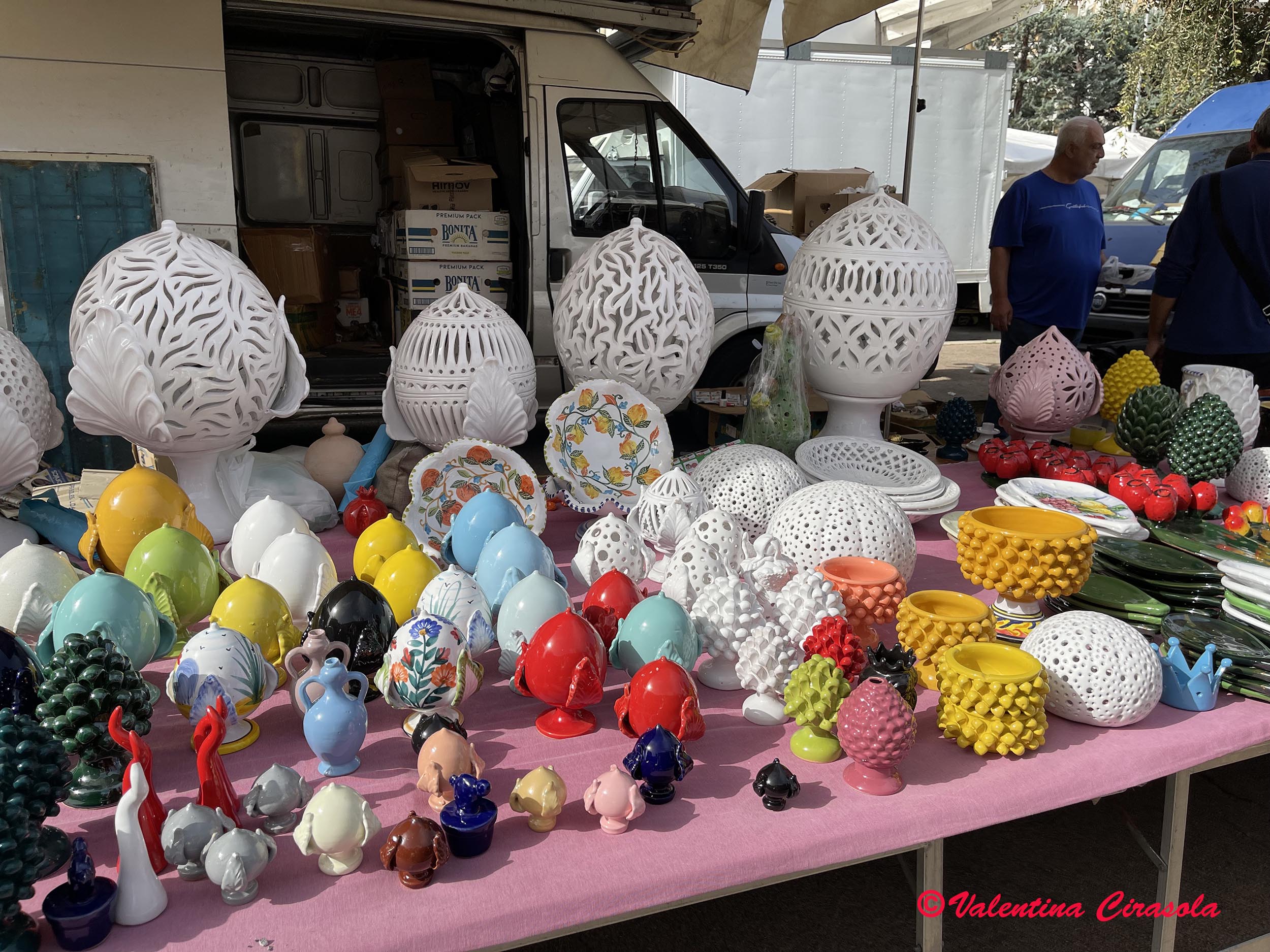
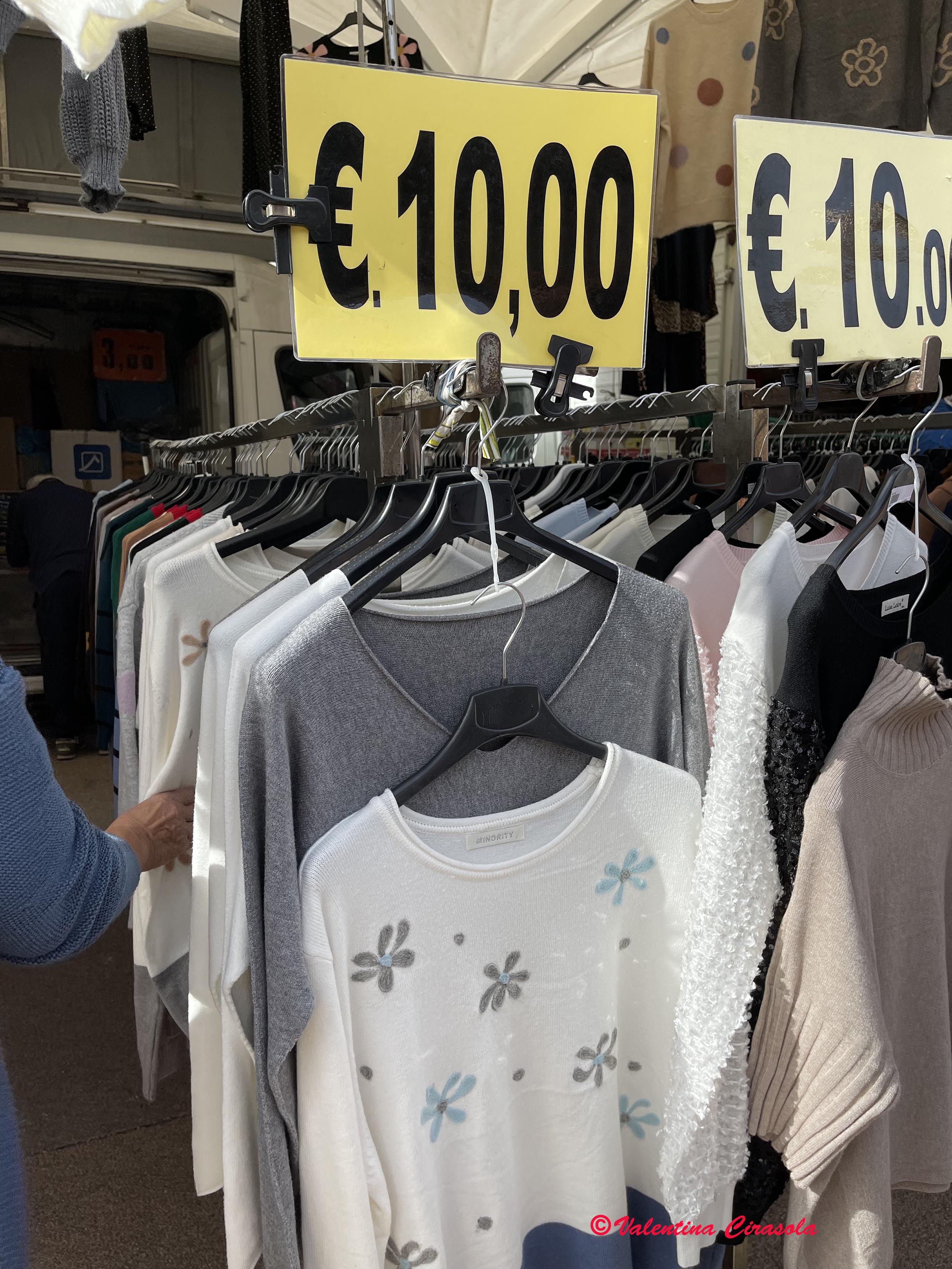
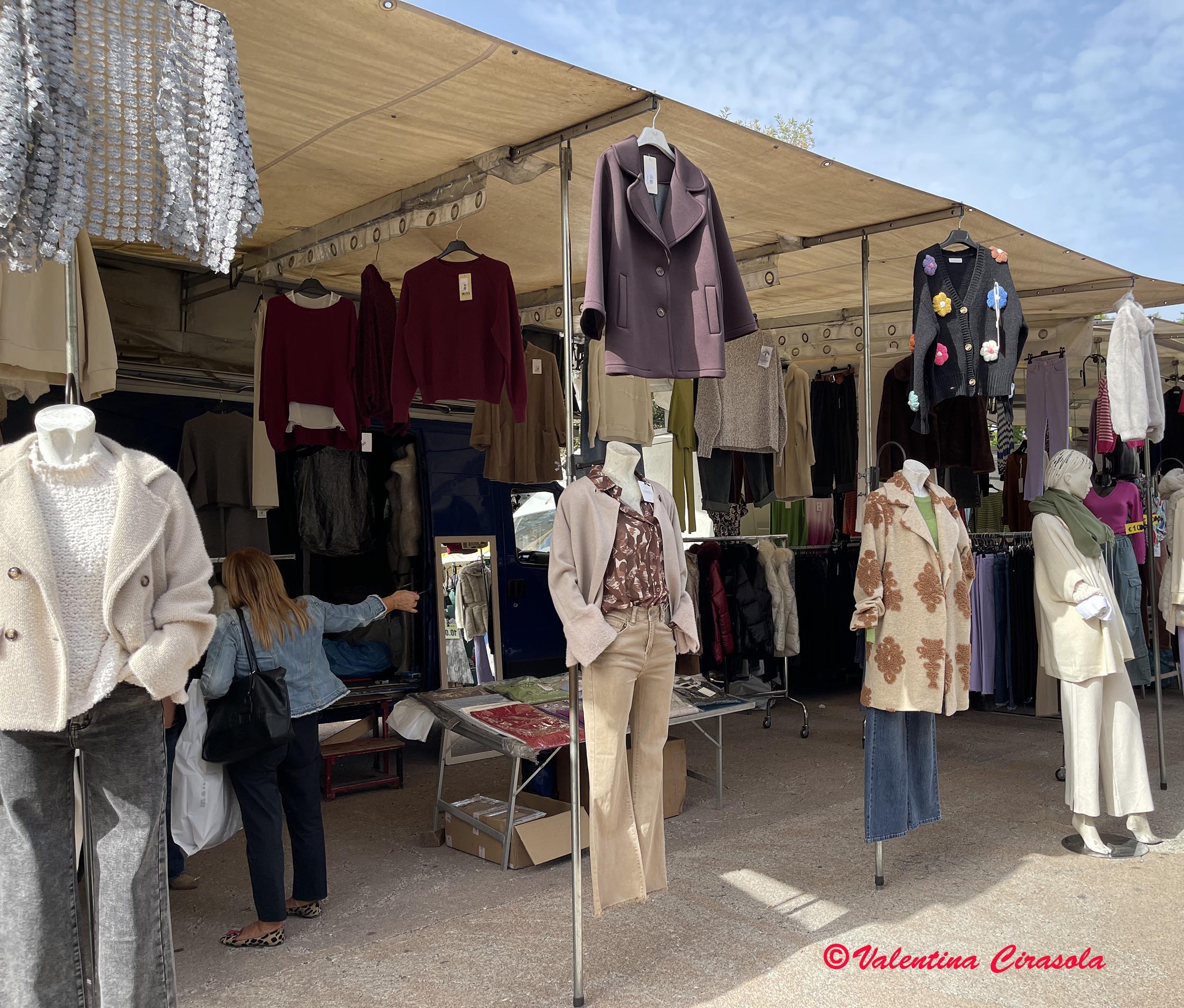
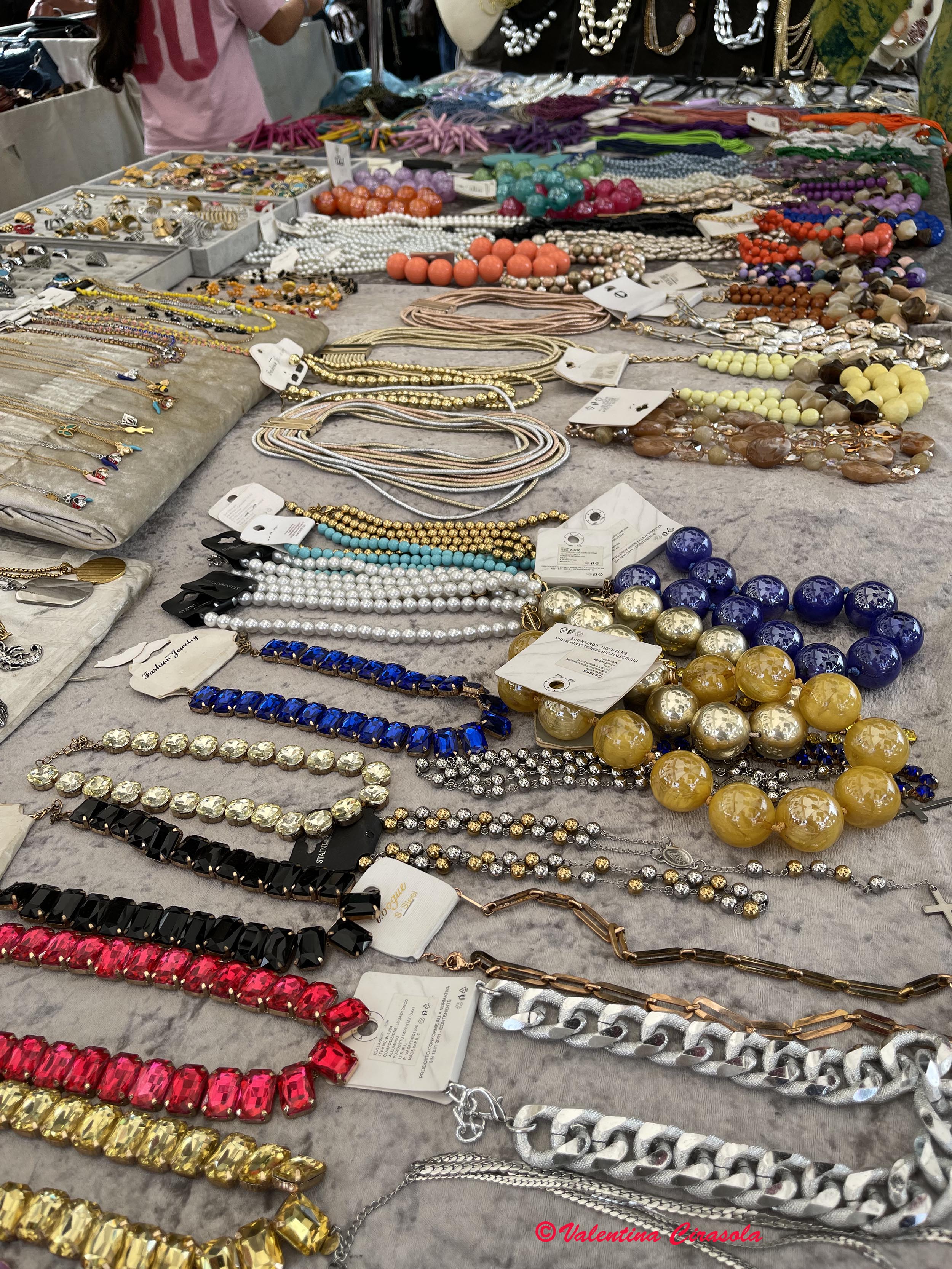
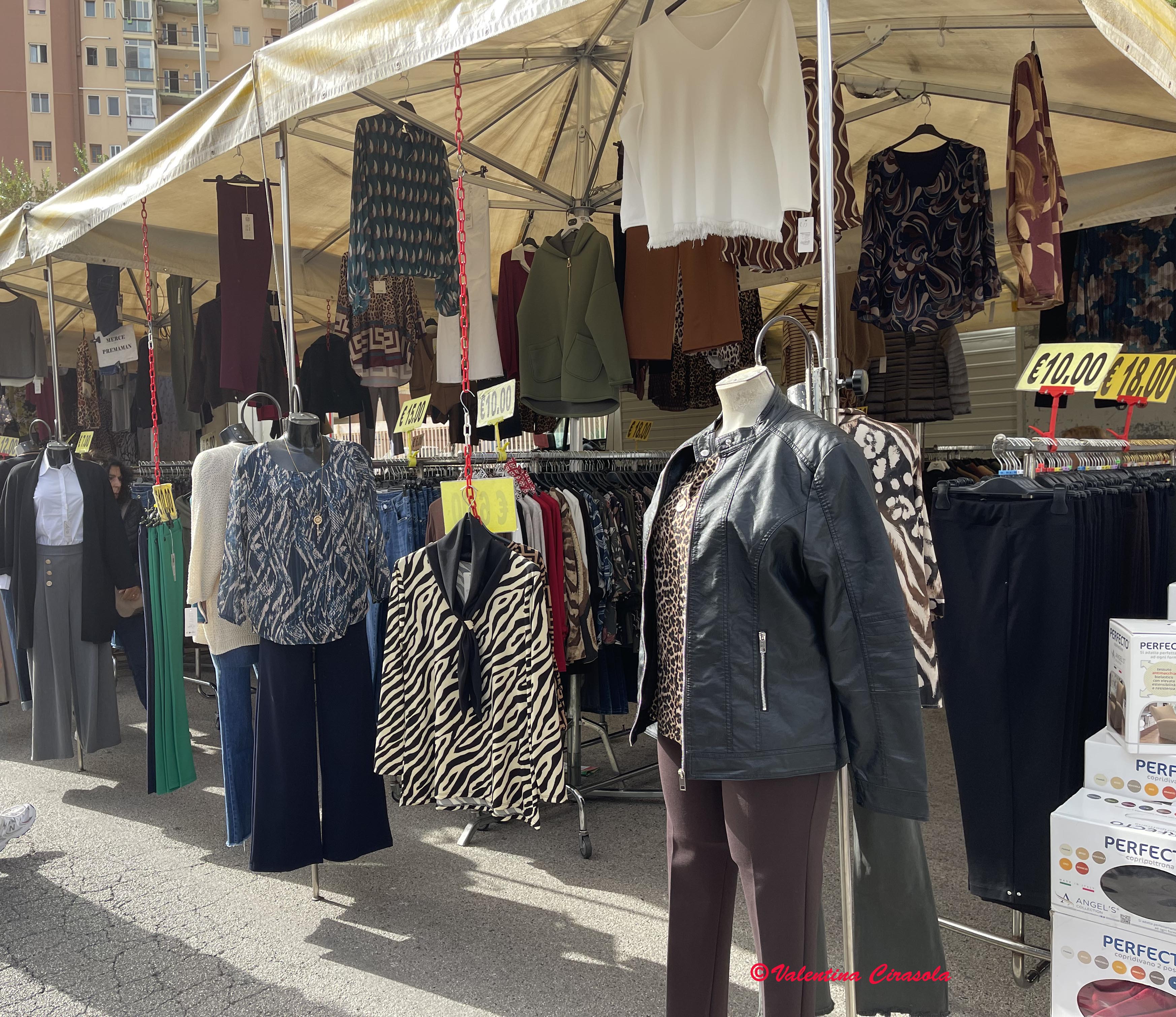
At the street markets, one can find home décor items, new and vintage clothes, shoes, fashion accessories, kitchen stuff, food and much more. There is something for everybody, every size, every taste, for women, men and children. People often exchange recipes at the food kiosks, while strangers tell you how good this or that garment looks on you at the clothes kiosks.
Home Décor.
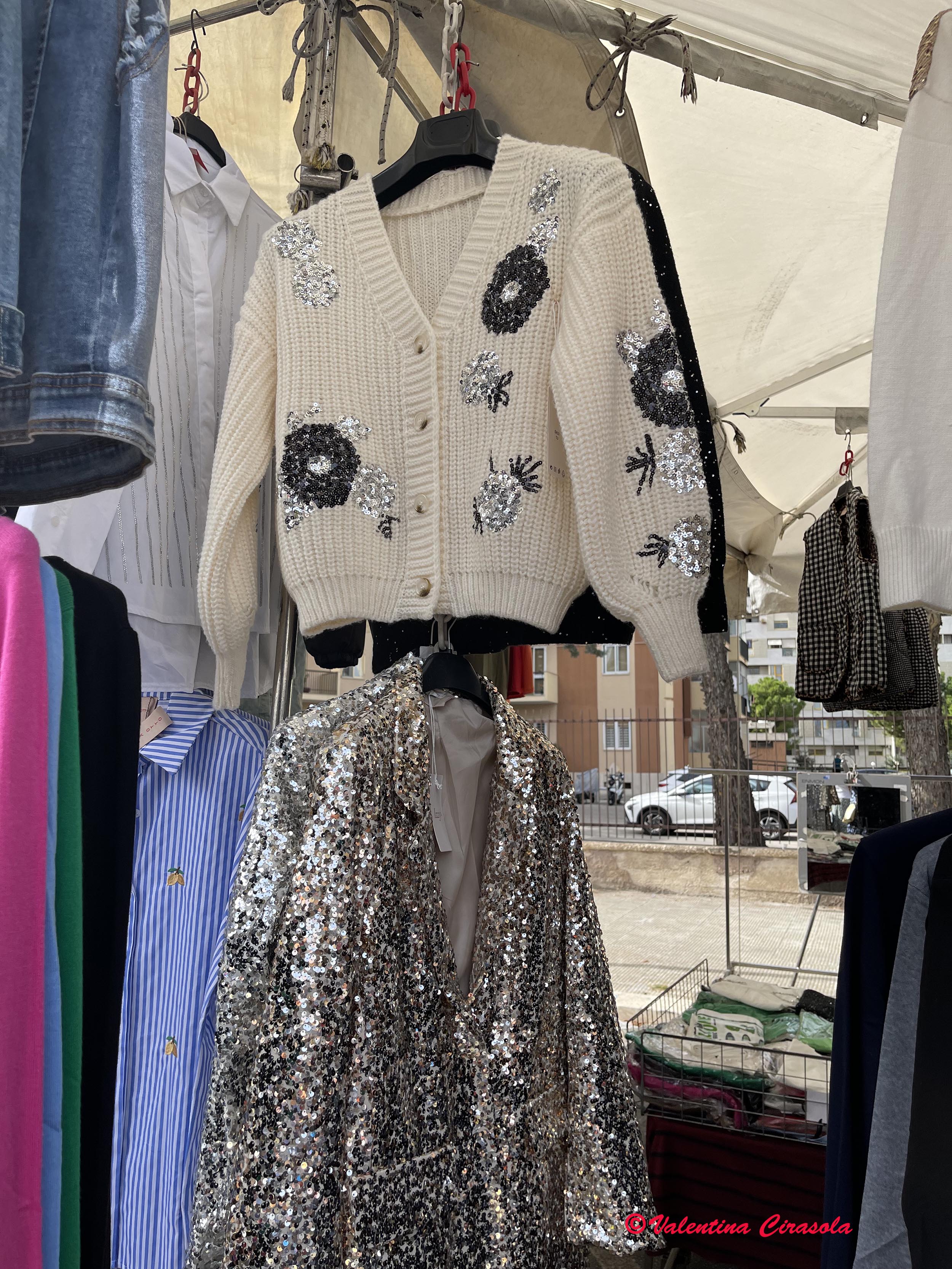
Sweaters
Winter Fashion
Jewellery
Women Clothes
Sparkle Clothes for everyday use
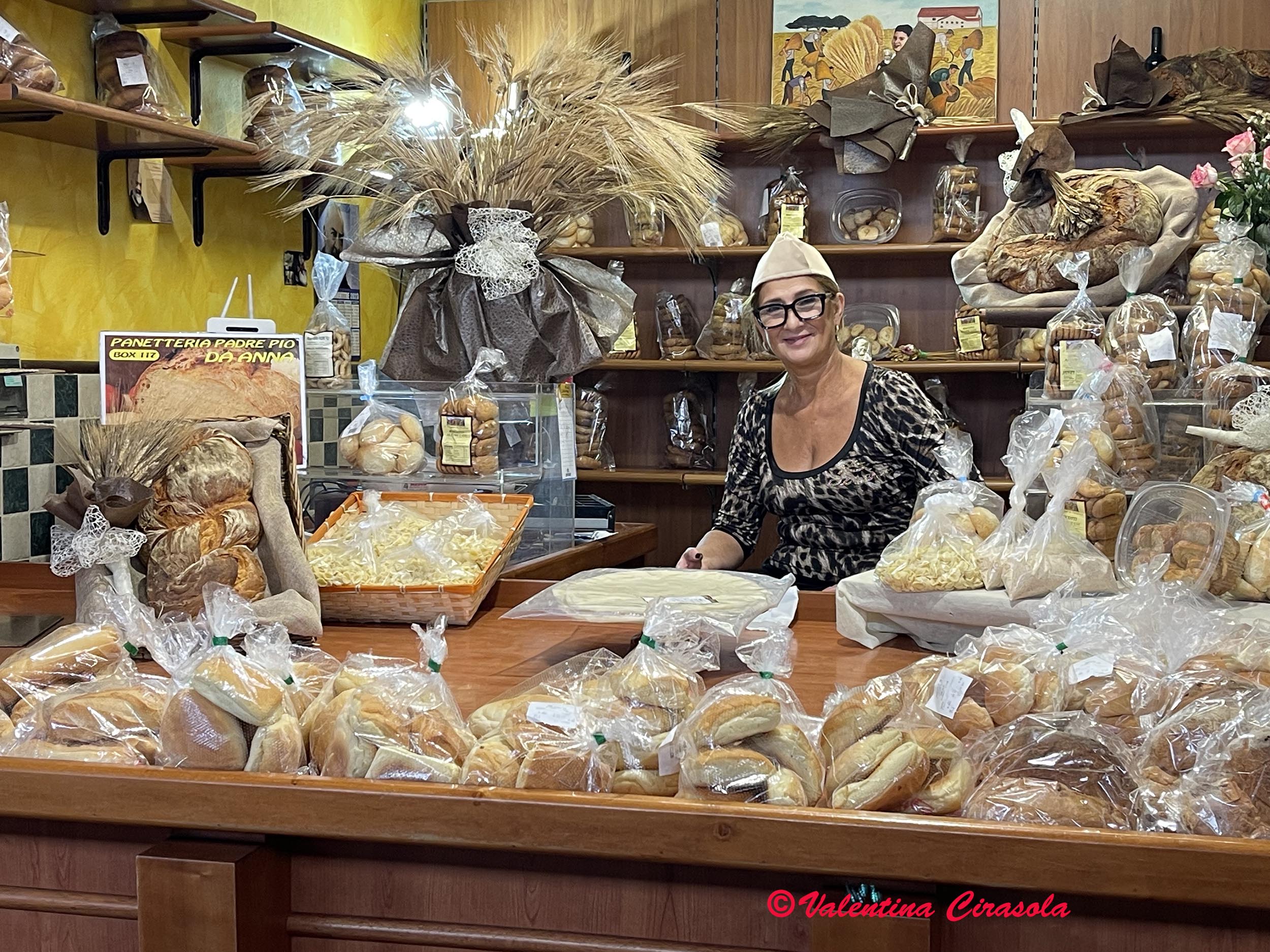
The bread Lady was so gracious.
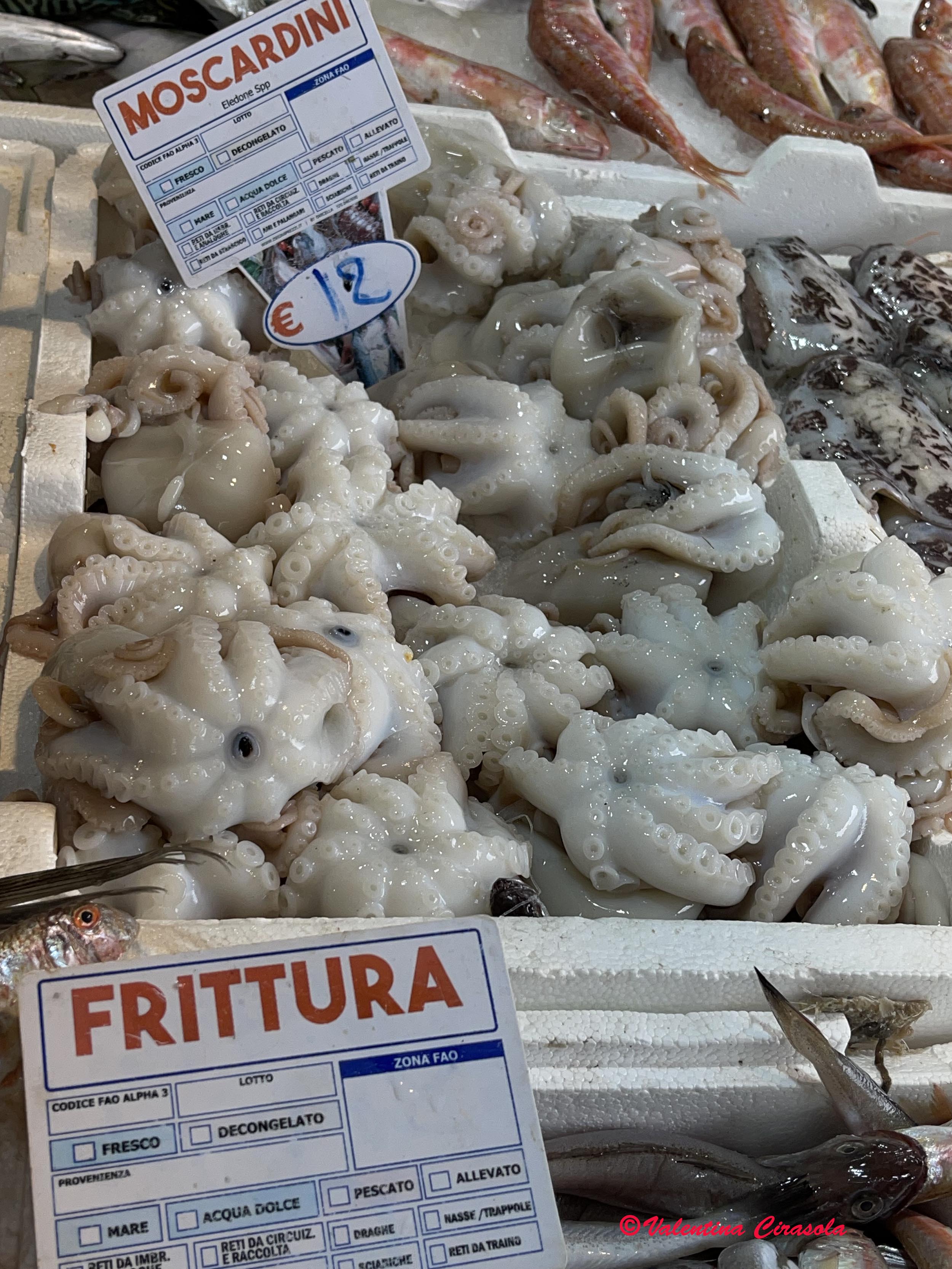
Typical baby octopus of the Mediterranean.
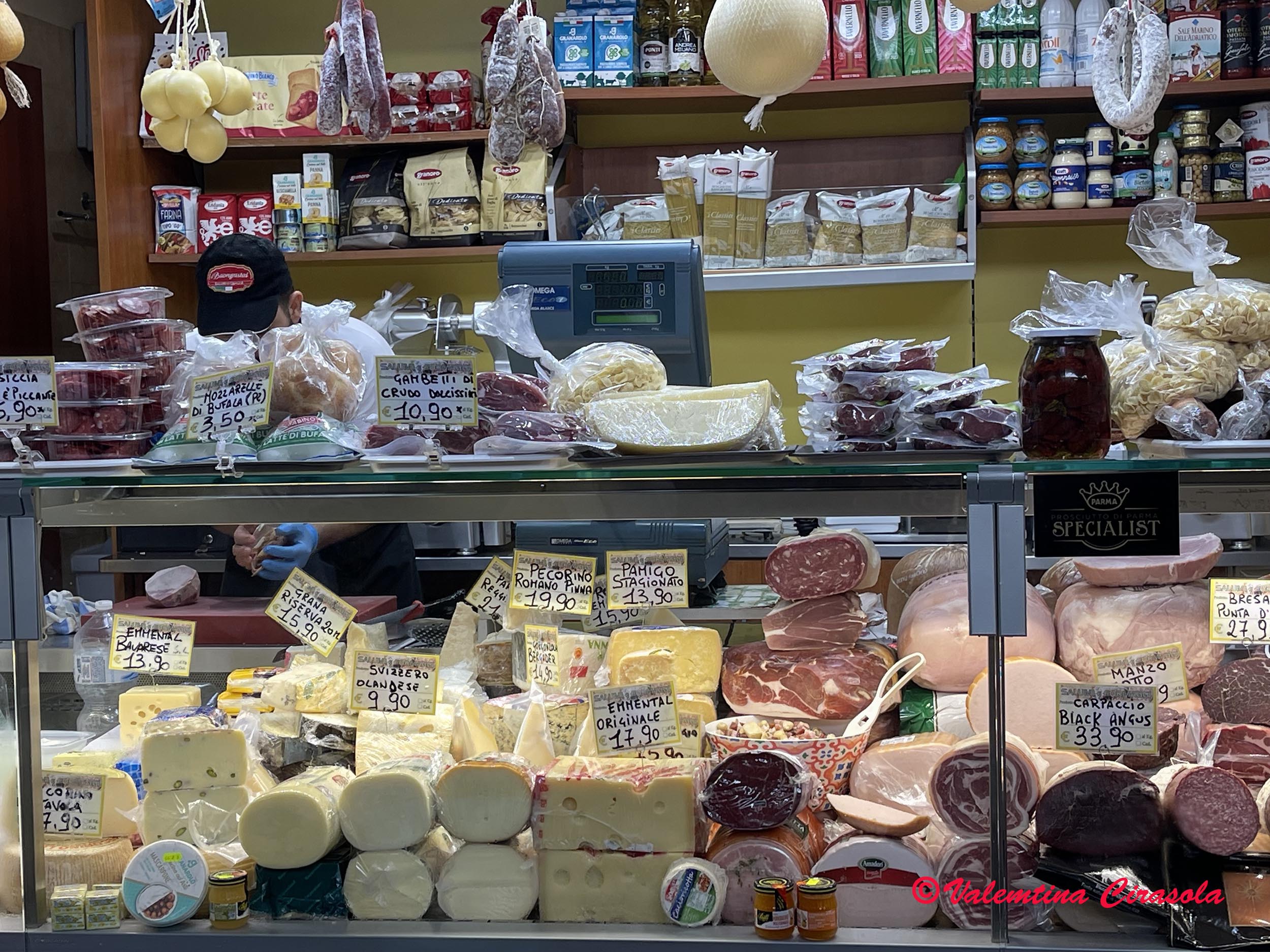
Cheeses and cold cuts.
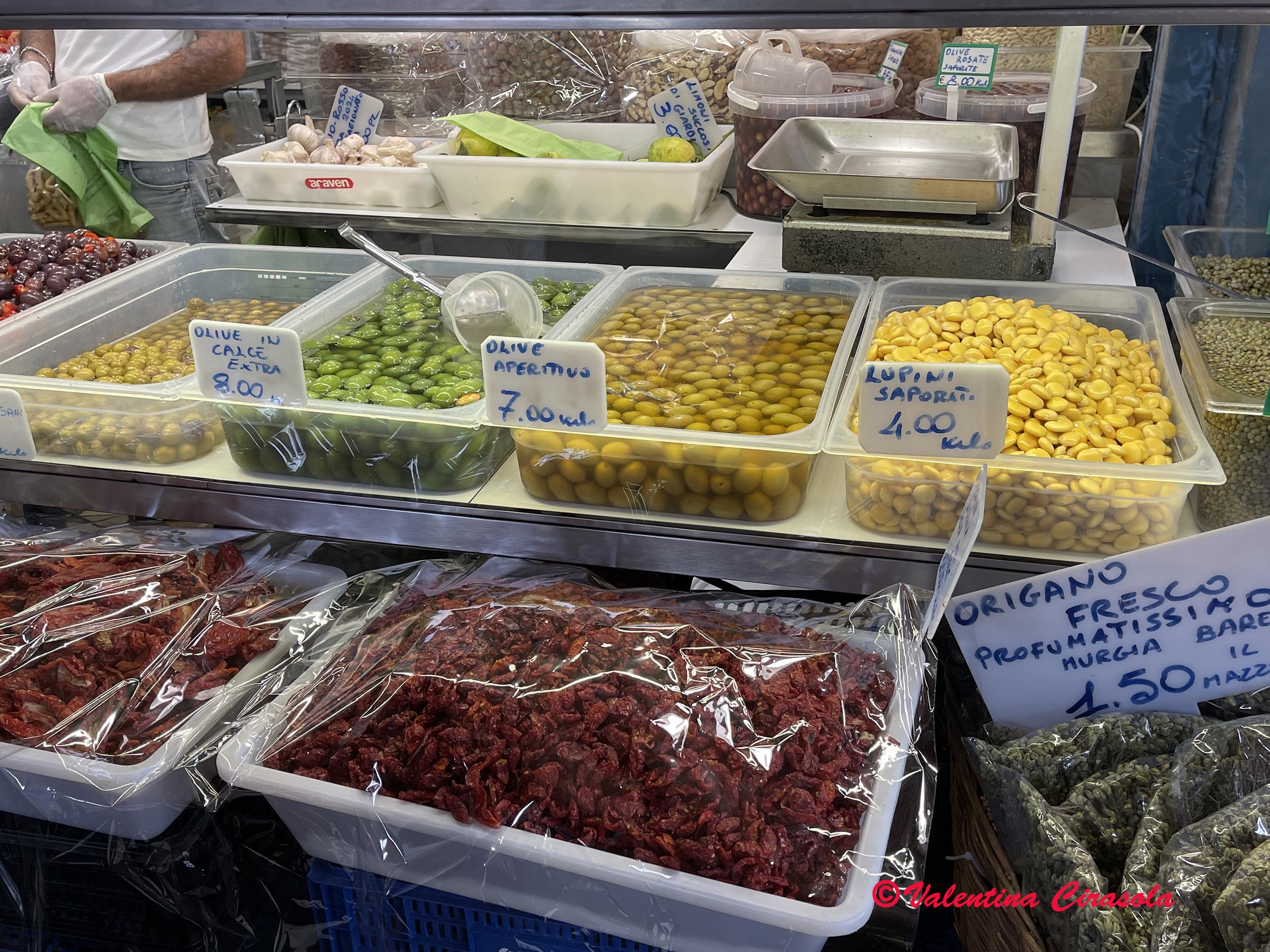
Olive, nuts and dry food.
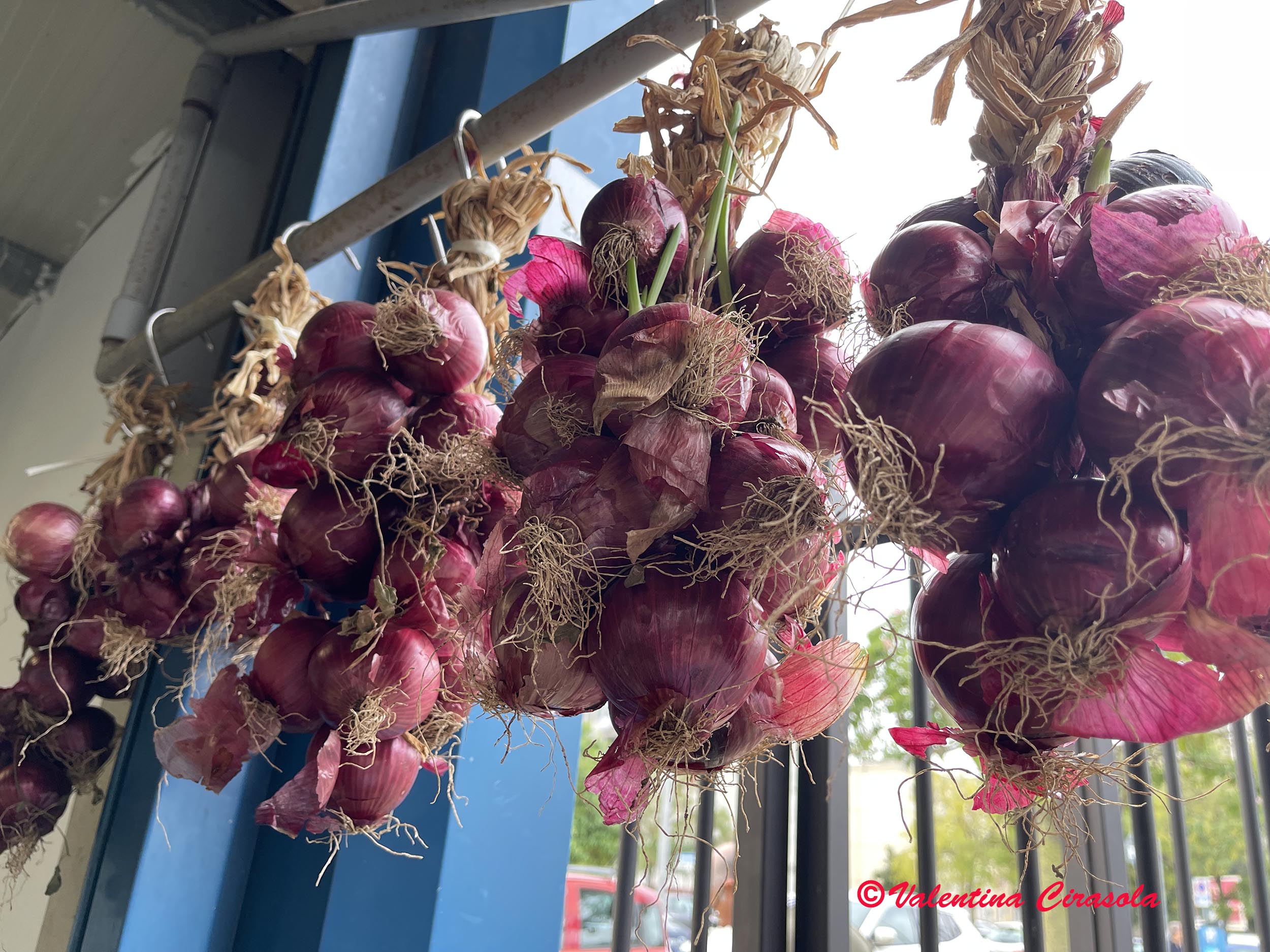
Red Onions
By this time, European street markets are already decorated with Christmas products. The atmosphere has changed, in some parts is snowing and very cold, but going to the market is still a great experience, especially at nighttime. Hot chocolate, mulled wine, chestnut roasting, pastry cooking and Christmas music fill the air.
Two months later, I am still thinking of the aroma I smelt, the food I tasted and the people I met. Life is certainly different in those parts of the world, my new plans will take me there again and often. I miss that lifestyle terribly, I want to be part of it just like I was growing up there. Ciao, Valentina
Valentina Cirasola is an interior-fashion consultant, author of 6 published books, a storyteller, and a longtime blogger. Her books are non-fictional practical ideas to apply in the home, fashion, cooking and travel. Get a copy of her books here: Amazon and Barnes&Noble
Do you think sequins belong only at the New Year’s party? Not anymore. Daytime affairs, running errands, going to the office or meeting with friends for coffee are good moments to wear sequins or shiny clothes. The secret is to wear sequins less conventionally in the daytime to make them pleasant and not make you feel out of place. Would you be afraid of wearing such a shiny garment if you were not attending a party? Would you worry about what people would say?
Worry not about people’s opinions, they don’t live your life and don’t pay your bills. Feel comfortable in your skin and wear all your best clothes any day, any hour of the day. Celebrate your life, as life will celebrate you back. Know that you are one of a kind and that your expression of originality can be an example for those who might not know how to do it.
Lately, I have worn sequins in the daytime very often. The sun’s reflection on the sequins projected on various surfaces feels energetic, as if I am bringing light, perhaps it is my perception, but all the bad energies, if any, bounce back and return to where they came from. It feels abundant, elegant and casual.
Here, I am wearing the same red sequin pants casually with a white T-shirt, a white sleeveless gilet and white trainers. Below, the red pants become smart casual with a houndstooth jacket and red velvet shoes (sabot).
Contrasts create an element of interest and build a great style, especially if it reflects your personality. Here the apple green oversized sweatshirt pairs well with the large gold pants and golden/white trainers. The tiger jewellery pin on my shoulder is such a kick and a conversation starter. The Chita bangles seem to go along with the green apple top and the gold pants.
I can turn the same gold pants into a smart casual outfit with a blue top, a gold buttoned blue jacket and blue velvet shoes. The same Chita bangles seem to like this outfit as well. As you can see, I can build a few different outfits with only these two shiny pants that some time ago would have been relegated to the holiday season.
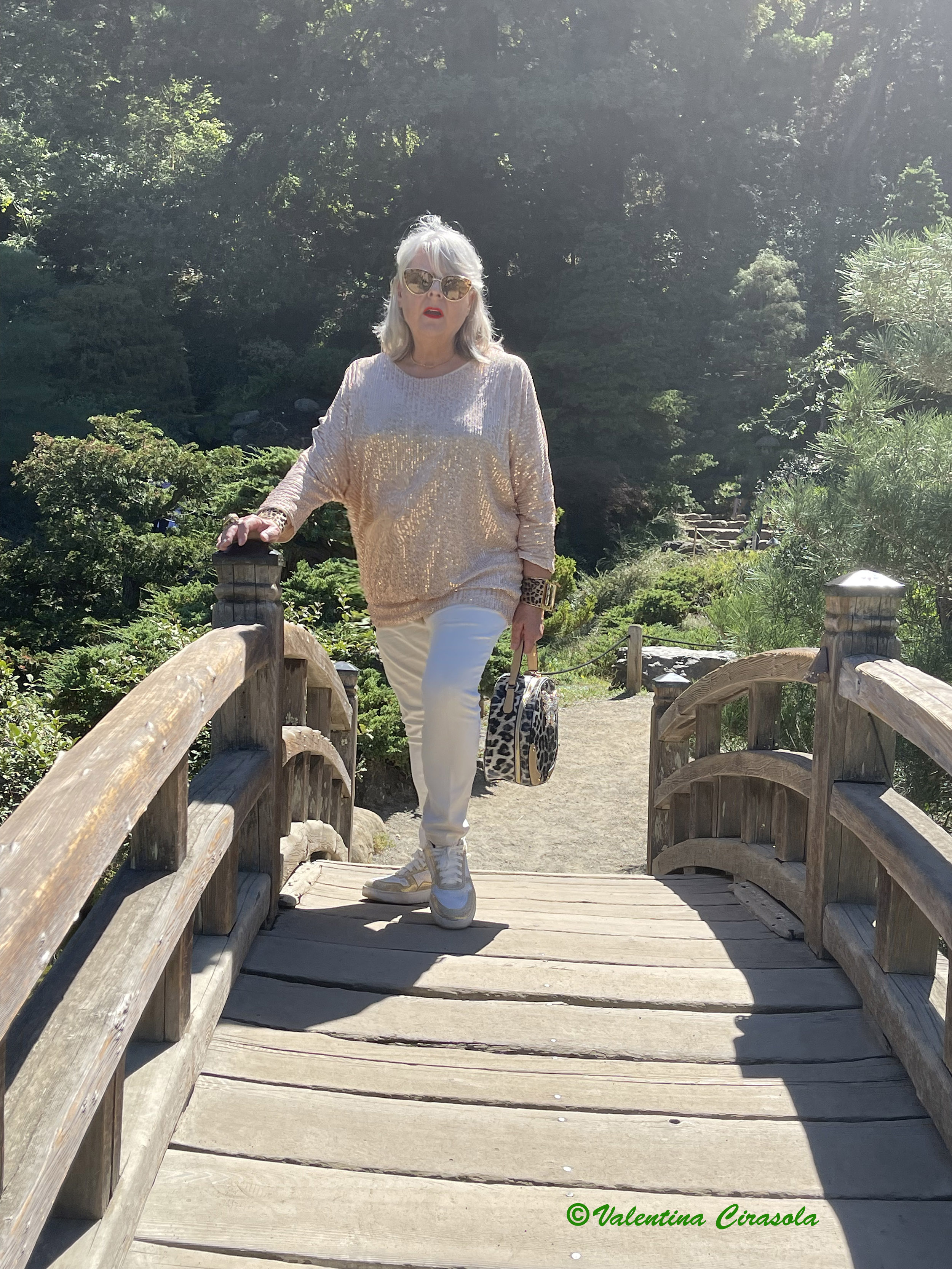
For the visit to a Japanese garden, I combined a champagne sequin top with cream-coloured jeans, gold/white trainers and leopard accessories.
The same glittered top with all the leopards became a super casual outfit to make an impression even if you run around for the most mundane activity.
The video below is a story about how important it is to celebrate your life, just don’t wait for that special party to wear your best. Ciao, Valentina
Valentina Cirasola is an interior-fashion consultant, author of 6 published books, a storyteller, and a blogger of many years. Her books are non-fictional practical ideas to apply in the home, fashion, cooking and travel. Get a copy of her books here: Amazon and Barnes&Noble
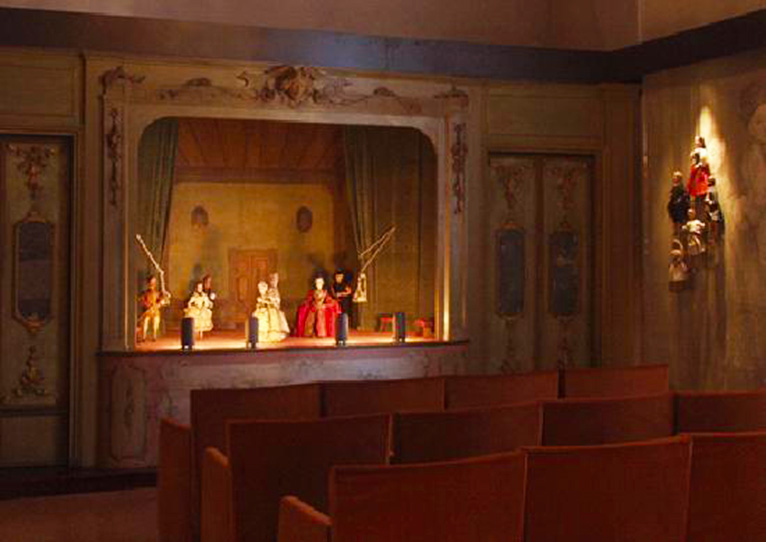
Summer is winding down and so is the warm weather, in a certain way I am happy, summer has become too difficult for me to take. I was having loose and unordered thoughts while sitting in my garden and a fun episode came to mind, my visit to Carlo Goldoni’s House in Venice. Goldoni was a witty, sarcastic Italian playwright and librettist of the Venitian Republic in the 1700s.
In preparing the luggage for my trip, I packed one of Goldoni’s plays, I knew visiting his House was in my plans, I wanted to envision his street plays and relive Venice of the 1700s through his writing. I loved that small theatre with a stage, regular theatre seats, dim lights and a great atmosphere!
Photo from: Venetoinside.com
I have been a lover of live theatre plays since a young age. In that moment, being in front of antiquity, I felt attracted to that small, ancient stage, it even smelled like the 1700s, perhaps my imagination played my fantasy. I started to recite aloud Goldoni’s play to experience being an actress in his time. When I travel, I don’t look like a tourist, I blend in with the locals, thus the attendant of the House probably thought I was a real actress practising and left me alone to do my things, but in the meantime a few hours passed by, he forgot about me being there and closed the House. When I realized I was by myself and locked in a Museum House it was evening and I started to panic a bit about rats roaming around at night in the streets and inside buildings.
The play I recited to myself was beautiful and threw me into another era. I would have loved to be enveloped by that atmosphere, but my reality was in today’s time and my modern phone got me out of there with a simple call to the emergency number.
Alessandro Longhi – Ritratto di Carlo Goldoni (c 1757) Ca Goldoni Venezia
Goldoni wrote many successful theatre stories: “Il Servitore Di Due Padroni” (The Servant of two Masters), “La Locandiera” (The Mistress of the Inn). “Il Bugiardo” (The liar), “La Famiglia Dell’Antiquario” (The Antiquarian’s Family) just to name a few. Next time, you are in Venice, please visit Goldoni’s House, his satire will give you a few hours of freedom from your reality. Ciao, Valentina
Valentina Cirasola is an interior-fashion consultant, author of 6 published books, a storyteller, and a blogger of many years. Her books are non-fictional practical ideas to apply in the home, fashion, cooking and travel. Get a copy of her books here: Amazon and Barnes&Noble
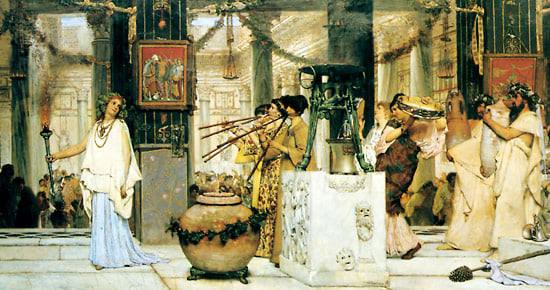
On the 1st of August, the Romans celebrated the harvest of grain, cereals and the Earth’s fertility. Under Roman Emperor Augustus workers were allowed to celebrate a day of rest after weeks of hard work in the agricultural sector and received a monetary bonus.
The festivity involved public rituals and banquets, bullfighting, sports events, excessive drinking and sex practices in which nobles, emperors, slaves, maids and the lower classes were permitted to participate. Even the working animals, such as cows and donkeys were left to relax for the whole month of August and showed off their festivity attires made of flowers.
Ferragosto became a law during the Renaissance throughout the papal states. The Catholic Church decided to move the festivity to the 15th of August which is the Assumption of Mary, as Ferragosto became so eradicated in people’s lives that the Roman Church decided to turn it into a legal festivity and made a holiday rather than suppress it. Mussolini, the Italian dictator, created “holiday trains” with extremely low-cost tickets for this festivity to allow the lower classes to visit cultural cities or to spend a few days at the seaside, from the 14th to the 16th of August.
Today, all the European Christian countries celebrate Ferragosto as a religious and a mid-summer holiday. I hope you get to take a mid-summer break, it is so important to recharge the batteries and keep on shining your light in this world. Ciao, Valentina
Valentina Cirasola is an interior-fashion consultant, author of 6 published books, a storyteller, and a blogger of many years. Her books are non-fictional practical ideas to apply in the home, fashion, cooking and travel. Get a copy of her books here: Amazon and Barnes&Noble
Ah, Summer, the only season that allows us to be lazy! I used to travel in the warm months from June to September, as most people do, but the heat has become unbearable to me and now I take short local trips during weekends. I take the longest trips during the off months when it’s cooler, there are not many tourists around and prices are down. Some of my Summer entertainments now are street fairs and visits to Museums. As a member of many museums, I have access to all exhibitions before opening to the public and it is quite a treat. Lately, I have seen the “100 Years of Fashion” exhibit.
The collections belongs to the most known European and some American designers who produced astounding creations in the last 100 years. However, I know the museum didn’t get the best of the best of this period, thus we must be content with their offering. The exhibition could have been better, so much more notable fashion was produced in this time period and was not on display.
I noticed that the visitors showed a little more attention to their own appearance, they dressed either in a funky, extravagant way or in a better than the usual casual, rundown way. I guess visiting a fashion exhibition encouraged them to play the part and leave the rag clothes at home. As an observer of social behaviors as I am, it was interesting to see the small effort people made not to be in their usual pajamas and flip-flops, as it is customary in these parts. Enjoy the short reel I made on my Istagram account.
Valentina Cirasola is an interior-fashion consultant, author of 6 published books, a storyteller, and a blogger of many years. Her books are non-fictional practical ideas to apply in the home, fashion, cooking and travel. Get a copy of her books here: Amazon and Barnes&Noble
Fashion In Paradise was the title of a TV show I produced last week at KMVT 15. I played on words, my guest’s name was Paradiso, an Italian Fashion Designer. His way of working with women and making them beautiful really struck me. He is not a mass producer of fast fashion and he does not employ underage slaves. He works passionately, and his collections are one-of-a-kind spiritual creations.
The fabrics Pietro Paradiso uses are eco-sustainable, they come from different industries; he upcycles, reshapes and re-uses them for a new look. During the show, we enjoyed seeing and learning about a corset made from the leaves of a ficus plant that he shaped for a woman’s body and then painted it in gold.
Another top was made of jute recycled from old-fashioned mattresses when mattresses were filled with the wool of sheep.
“Soul Shirt” is a project he created for women afflicted with breast cancer. He doesn’t let women choose any new dress from his collection and goodbye. If a client suffers from cancer, he gives her seven coloured pencils that relate to each chakra and a mandala to colour. Based on the colours the client chooses, he knows which chakra to balance or heal and knows which colours are the best for that woman to wear, thus a dress or an outfit is created just for her to support her needs. At the end of a project, the client gets the soul t-shirt printed with her colours as a reminder she is a fighter and loved by many. With the process of colouring a mandala, the client frees herself of all the pains, anger and frustrations deriving from cancer. How many well-known designers do that before selling a dress?
If you like to watch the show, here it is.
Kudos to Maestro Pietro Paradiso for being one-of-a-kind in his trade, for not following all the other designers and for not putting the profits in front of human feelings. He gives beauty back to women suffering from cancer “because living an illness does not mean identifying with it” says maestro Pietro Paradiso. It was refreshing to hear his words; now I am honoured to be in his circle. Ciao, Valentina
Valentina Cirasola is an interior-fashion consultant, author of 6 published books, a storyteller, and a blogger of many years. Her books are non-fictional practical ideas to apply in the home, fashion, cooking and travel. Get a copy of her books here: Amazon and Barnes&Noble
I was pondering on the energy fields in homes and how objects and rooms are linked to our body organs. It sounds peculiar to think our organs have anything to do with rooms in the home, does it? Think about the theory of Feng Shui. The ancient Chinese Taoist geomantic discipline studies how to arrange spaces and objects within our homes to significantly influence our lives. According to this discipline, the position of objects, decorating homes in a certain way, or even building homes facing certain directions are all based on the Earth’s energy, astronomical alignments, sacred geometry and numerology to bring harmony into our living. In the Western world, undoubtedly the living room is the most lived-in, or the central part of the house. It relates to the stomach which is the centre of our body and therefore relates to life’s changes. In various cultures, the living room might not exist as we intend it in the Western world, perhaps the kitchen is the central part of the home and it works just the same in relation to our stomach.
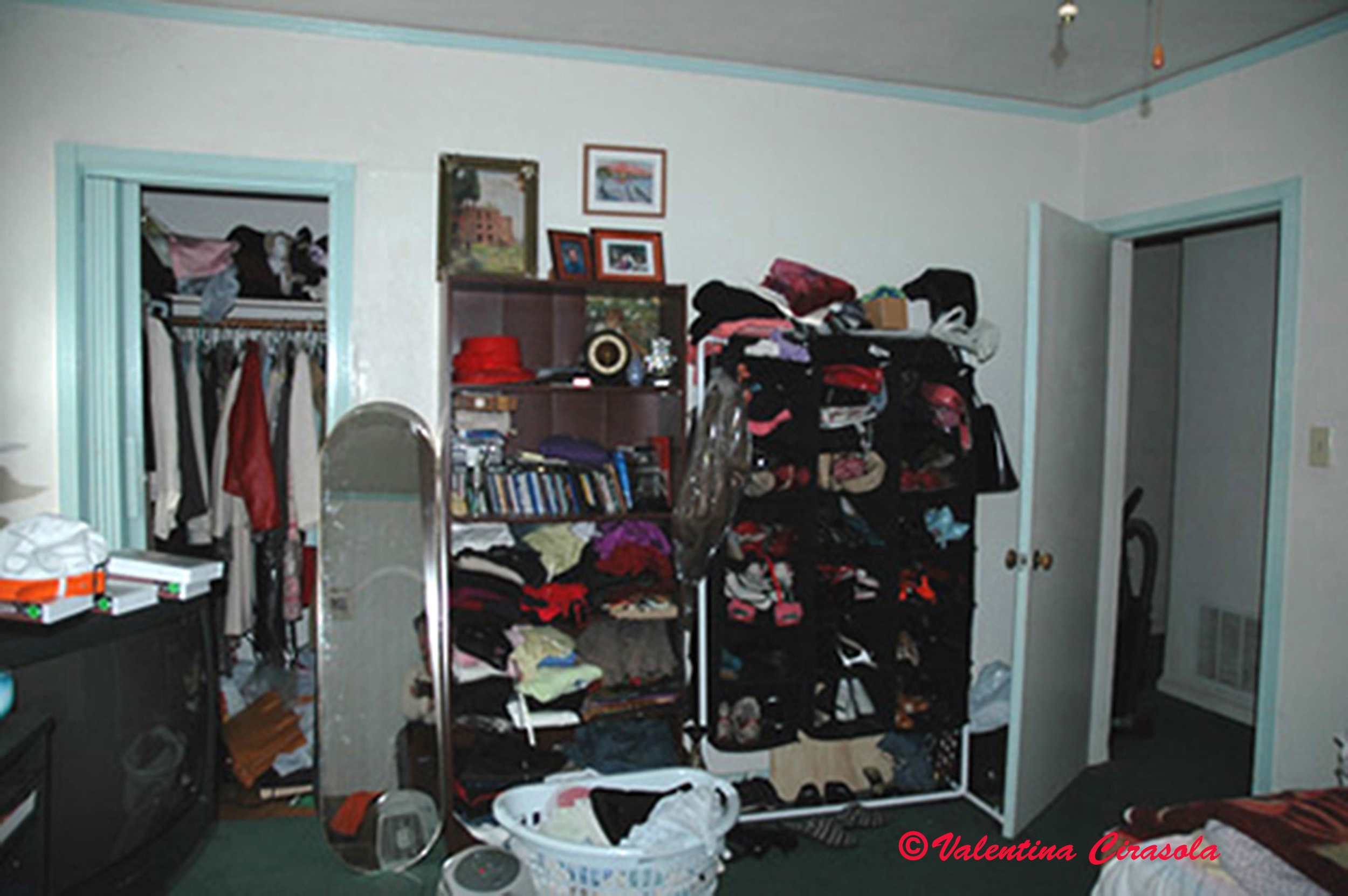
We all have abundant superfluous stuff that overwhelms us. Reorganizing a room or even the entire home could be a daunting task, I know, I went through that experience with a few clients. The best way to start is to tackle the room that creates anxiety and mental confusion. If the house is cluttered it’s also not clean and family discords often stem from an unkept home.
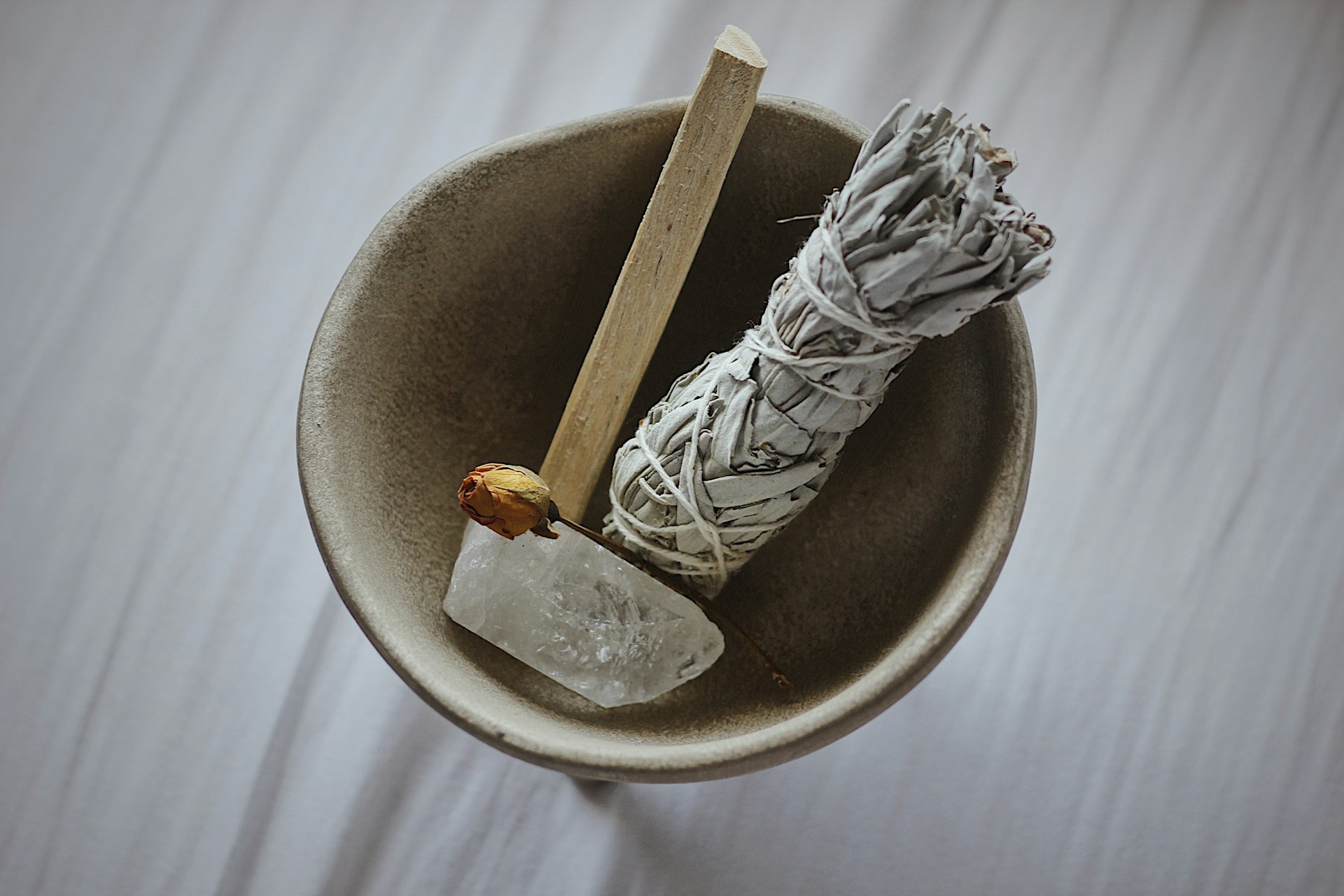
White sage – Photo: Karly Jones – Unsplash
Begin reorganizing by giving a spiritual cleanse with burning white sage that purifies the room. By doing this practice, every object will take on a new energy. Stay focused, and don’t start with time-consuming objects that will take you down memory lane, like photos, you will end up losing the main objective which is to tidy things up. Reorganizing photos will bring nostalgia, you will look at how fashion was, the hairstyle of a certain year, you will see yourself younger and all that happened in your life that has gone by. The items to be organized, books, clothes, music, papers and so on, represent your past and present, they often hide your desires or needs. Remember why you bought certain objects, do you think you will need them again? The phrase “I might need it again” creates a dependence on a specific object. It happens to women who want to lose weight and keep their wardrobe full of clothes that no longer fit in the hope those extra pounds will go away. You must be convinced a change will occur for real and that you will not return to the same clutter, then you create a future.
Between 1920s and 1930s Baron Gustav Freiherr von Pohl, after extensive research on his studies in the geopathic stress, found links between negative earth energies and diseases. He understood there was a correlation between the position of beds of people who died of cancer and the ‘black streams’ under their homes (decaying matter, burial ground, dirty river or canal, radiation, coal mines, electric power stations, microwave towers, and much more).
My analogy about each room in a home being related to each organ in our body is not one of my creative fantasies. Scholars, researchers, scientists, Feng Sui practitioners, spiritual coaches, numerologists and so many people have found the same connection between home and body.
The bathroom, for example, is a place for relaxation and personal care. It links to our digestive discarding track and how good we feel when the body’s functions are carried out successfully. The bathroom is certainly a room of Water (one of the elements of Feng Shui), which is why objects that recall the element of Fire must be avoided, such as red towels, red objects and red walls. According to Feng Shui, the bathroom must never be adjacent to the kitchen and main entry. To avoid contamination of energies, the head of the bed must not be placed against the wall communicating with the bathroom. These are some examples of how geomantic stress, body organs and rooms of the house are all related.
The message I want to give here is to think of your home as your body. As you nurture, clean and take care of your body and organs, it is important, just as much, to take care of your home, room by room. Ciao, Valentina
Valentina Cirasola is an interior-fashion consultant, author of 6 published books, a storyteller, and a blogger of many years. Her books are non-fictional practical ideas to apply in the home, fashion, cooking and travel. Get a copy of her books here: Amazon and Barnes&Noble
Every woman carries handbags of all shapes colours and sizes, we collect them in the latest style or proudly wear vintage pieces, but does every woman know the language of handbags or their functions?
Every few hours of the passing day requires a certain size of a handbag. The large bags are appropriate for mornings, inside of which anything can be added for every need of the day; the medium sizes are for the afternoons and the smaller bags are for the evenings’ affairs. An evening bag might be added inside the daytime bag for convenience ready to come out at night together with an elegant pair of shoes.
In today’s time is no longer necessary to match the colour of shoes to the colour of handbags, unless one has an invitation to dine with the nobles and the upper class. Today we feel free to combine colours and styles interchangeably with shoes and bags and make creative combinations with the two items. Colours and texture determine the time of the day and the seasonality of a handbag. A yellow handbag is great for daytime but not for an evening event. A black leather handbag is perfect for winter but not for a hot summer.
Like garments, a handbag can embellish or break the body and the whole look. If you are a petite woman avoid carrying large bags, but if you are a tall woman don’t carry the smaller bags, it’s all about the body’s proportion and harmony. The shape of the body also comes into play when choosing a handbag. If your body is sinuous and curvy, choose square and rectangular handbags and vice-versa.
Does the hardware of a handbag matter in the making of your body’s architecture? Does it go with the colouring of the outfit and jewellery? Let’s look at a building designed in classic architecture. We will see a line of rounded top windows on one row and the triangle top windows on another row, then we see repetitions in the same order as musical notes in a refrain. If the hardware of the main door is brass, all the hardware of doors and windows will be brass. There will be people who argue that rules are made to be broken, I agree with that for certain things. However, if harmony in our look is what we want to achieve, those details that make us feel good and make others feel at ease when they look at us, following some basic rules is the way to do it, everything else is fantasy.
Portable bag hooks are a good solution to keep the handbag off the floor when in public places, a pochette or a clutch can always be placed on the lap or in a little space between the butt and the back of the chair.
I found it fascinating how the longest-reigned Queen Elizabeth II spoke with signals using her handbags. I saw a documentary about her interesting language. The Queen shifting her handbag from hand to hand meant she was finished with the discussion and her aide’s job was to rescue her out of that situation promptly. If Her Majesty placed the bag on the floor, it meant she was not enjoying the chat with the interlocutor, the lady in waiting had to intervene. A handbag placed on the dinner table was a sign that the dinner had to finish in the next five minutes. How an elegant way to say to people “I have had enough of you”!
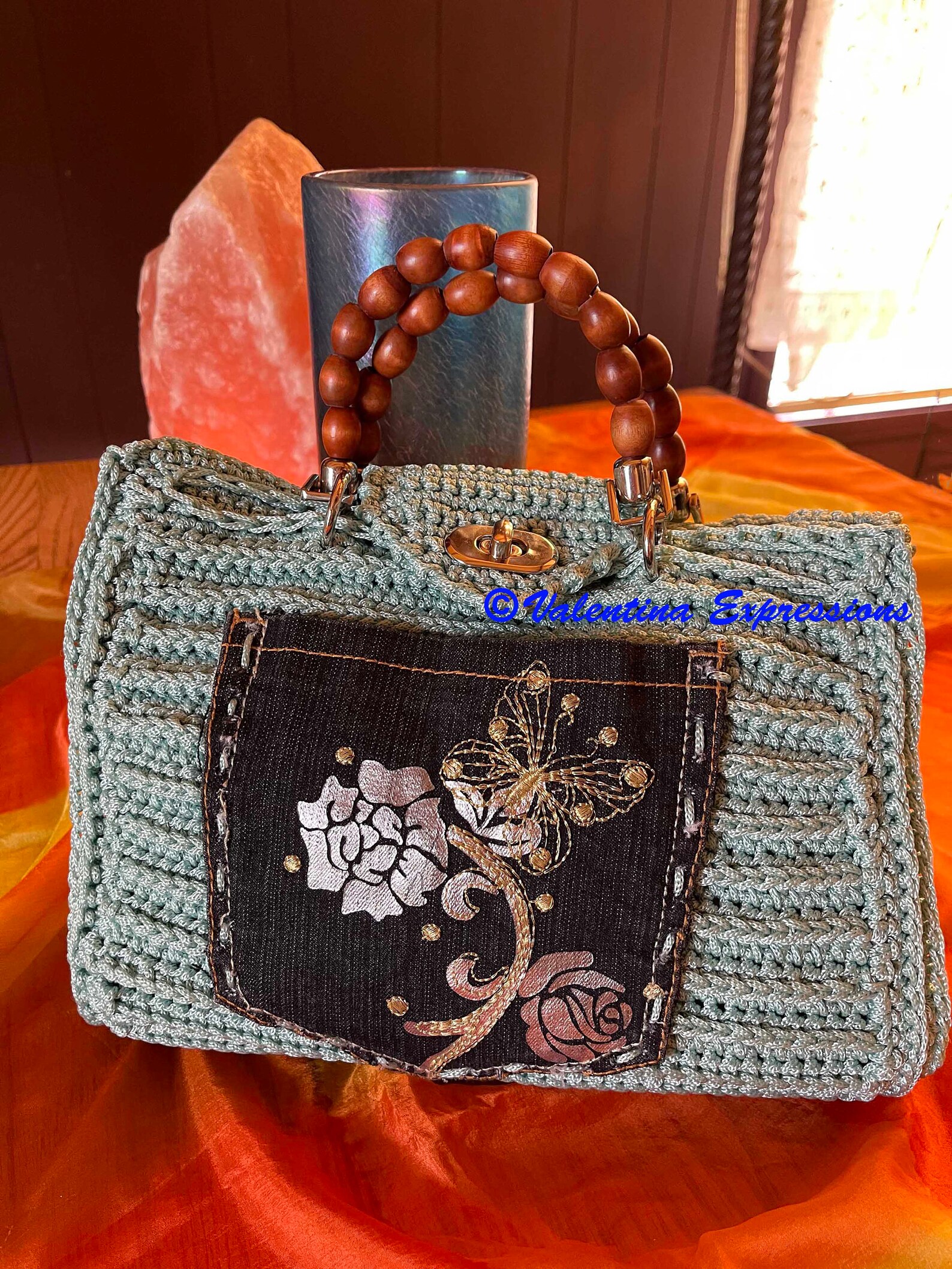
They are made of various materials: macrame’, metallic fabric cloth, metallic string, worsted cotton and much more. The language they speak is the language you attribute to them. Ciao,
Valentina Cirasola is an interior-fashion consultant, author of 6 published books, a storyteller, and a blogger of many years. Her books are non-fictional practical ideas to apply in the home, fashion, cooking and travel. Get a copy of her books here: Amazon and Barnes&Noble
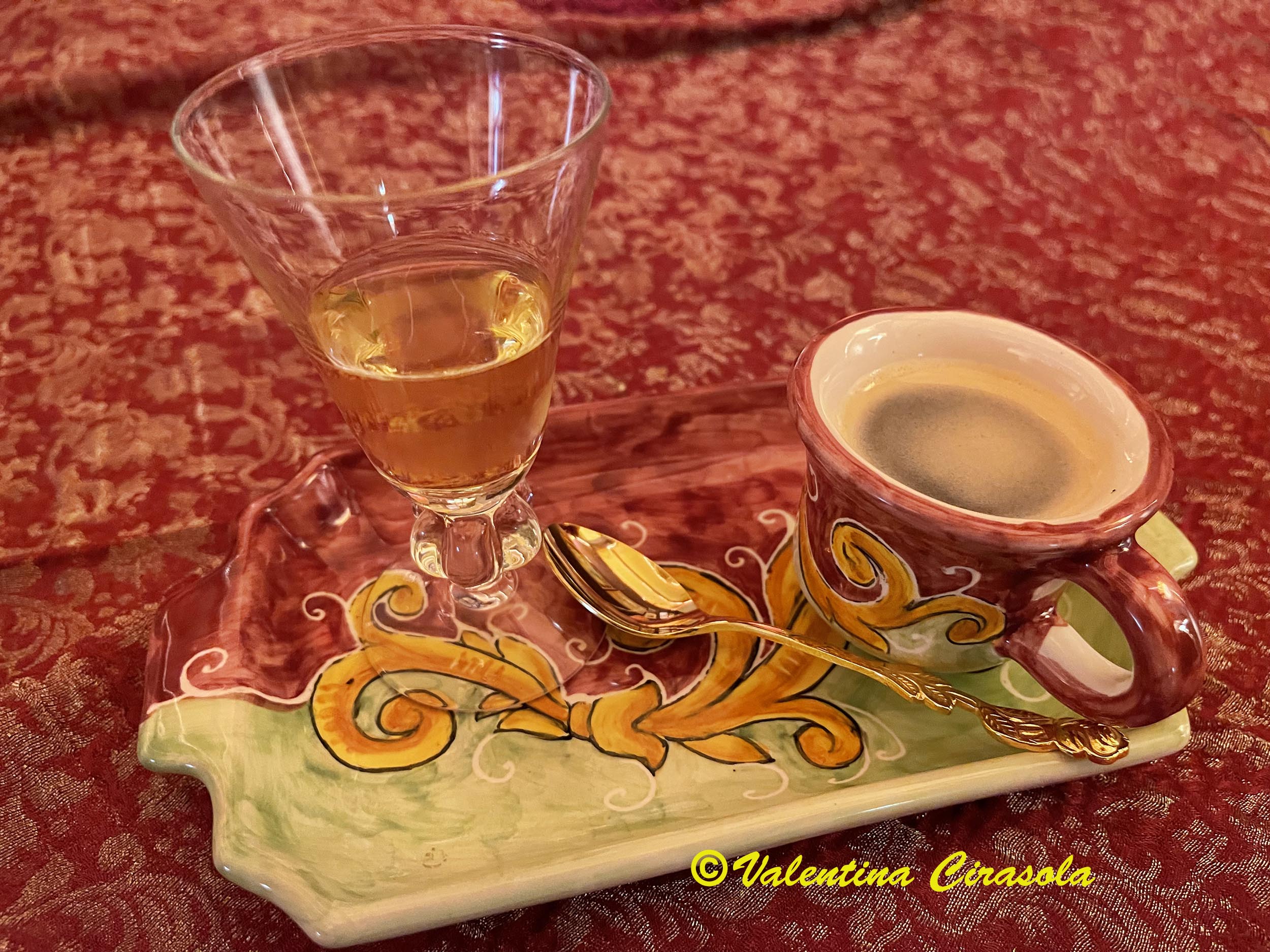
“Coffee On The Fly” is how my Italian title translates. Coffee on the fly in Italy is a common expression all Italians use when they order a cup of expresso in a coffee shop, no fuss, no addition of strange flavours, no cup sizes to remember, no special requests, just a straight expresso coffee served in a white or brown demitasse.
I am enjoying the hand-painted demitasse sets I purchased from a friend who imports Italian ceramics and other beautifully hand-painted products made by skilled artists in Italy. https://www.gioialuce.com The cups displayed in my photo are exclusively made for expresso, short and to the point. One might serve a spoonful of ice cream in it, but that’s all, those cups are made only for a fast coffee. Who cares for modern linear design when I can enjoy a traditional Renaissance pattern, a cluster of lemon design from Amalfi or a floral pattern from Sicily?
Sometime ago, a friend asked me why in Italy everyone takes coffee standing up at the counter and in a hurry instead of sitting down. She told me that Americans like to “nurse” their coffee. What a strange expression, I replied. Why do Americans drink a liquid that is sick and needs to be nursed? I didn’t understand it until I started to pay attention to the coffee habits in America. Coffee is an electrifying and invigorating drink, we drink it to get a boost of energy when we wake up in the morning or anytime we feel sluggish. Italians drink coffee while it is hot and the size of a demitasse is the right size of energy we need. Italians drink expresso standing up at the counter because they are not tourists in their country, they have places to go and things to do; sitting at a table would raise the price of the coffee, it would take a person to serve it and clean the table afterwards.
The difference between Italian expresso and American coffee lies in the size of the cup and the toasting of the beans. Expresso is toasted dark and strong, a few drops in a cup are enough to shoot you to the Moon. American coffee is toasted lightly, it is brewed watery like tea but it doesn’t mean it is light, in fact, the caffeine content is higher than expresso. Another difference is that no one in Italy walks in the streets holding a cup of coffee in the hand, not done, only gelato to lick, with possible funny and not-so-funny comments from passers-by.
A nice alternative to expresso is cappuccino, served in a squatted large cup with expresso and warm milk foaming at the top for a great effect. A must-know if you visit Italy: Italians don’t drink cappuccino after 10:00 am and get appalled to see tourists drinking it at all hours of the day even after they eat pizza. As the day progresses, Italians also progress into drinking wines for lunch and dinner, aperitifs for mid-afternoon and cordial or bubbly wines for the evening. By the way, the word cappuccino comes from the Cappuccini Monks Order who wear a simple brown cloak with a long, pointed hood hanging down the back (cappuccio).
Caffe’ macchiato, meaning an expresso stained with 2 drops of warm milk served again in a demitasse is another way to drink an expresso.
The biggest surprise is when I say that most of us Italians drink expresso with “ombretta” in the morning.
Ombretta literally means a small shadow and it refers to a short shot of a liqueur that accompanies the expresso in the morning. It is mostly a custom of the northern Italians living in cold regions. Drinking a ombretta in the morning is not to get drunk at the start of the day, but only to stay warm. In the photo, my ombretta is a sip of Limoncello liqueur. These are the only few ways to order coffee in Italy. You get it bitter from the barista, you add your own sugar or nothing.
How to stir sugar into an expresso coffee is another story. It is often said: “When in Rome, do like the Romans”. In any foreign country, it is ideal to blend in as much as possible and not to attract attention to oneself, unless your somatic treats will give you away. Anyway, learning some customs of the country you want to visit will put you in an advanced position. If you are up to that, then, coffee will be stirred clockwise and not the opposite.
I must say that Italy is a modern controversial country, but the traditions are ancient and will stay that way. Ciao, Valentina
Valentina Cirasola is an interior-fashion consultant, author of 6 published books, a storyteller, and a blogger of many years. Her books are non-fictional practical ideas to apply in the home, fashion, cooking and travel. Get a copy of her books here: Amazon and Barnes&Noble
Welcome! Immerse yourself in the colorful world of Modern Tropical, an eclectic lifestyle brand for people who love the retro-modern beach aesthetic. It is produced by independent award-winning artist Kristian Gallagher.

































 Valentina Expressions